

One-way car shipping for a road trip means you drive your own car one direction and have a carrier truck it the other way, so you skip half the miles without giving up your car. It is a smart fit for long scenic drives, cross-country moves with a fun route, or trips where you would rather fly home. Expect to pay about $500–$1,900 on an open carrier, with coast-to-coast transit usually taking 7–10 days.
Key takeaways
- You can ship your car to the start of your trip and drive home, or drive out and ship it back.
- One-way shipping often beats a one-way rental when you add up drop fees, mileage and wear on your own car.
- Book 1–2 weeks ahead and give a flexible pickup window to get the best price.
- Plan your flights around the delivery window, not a single exact day, unless you choose a guaranteed delivery date.
- Pack road-trip gear in your luggage, not in the car, since most carriers do not allow personal items.
What is one-way car shipping for a road trip?
A classic road trip has a problem: the drive home. Driving 2,500 miles out and 2,500 miles back doubles your fuel, hotel nights and time off work. One-way shipping cuts the trip in half. You enjoy the scenic leg in your own car, then hand the keys to a carrier for the return, or the other way around.
Because you are only paying for one direction, the cost is usually close to a standard state-to-state car shipping quote for the same route. There is no special road-trip fee.
Two common ways to set it up
- Ship out, drive back. Your car is trucked to the start of your trip, for example from New York to Seattle. You fly to Seattle, pick it up and take your time driving home along a route you choose.
- Drive out, ship back. You drive a dream route like Route 66 or the Pacific Coast Highway, then release the car to a carrier at the end and fly home. Your car arrives a week or so later.
Why ship one way instead of driving both ways?
The math is often closer than people expect, and the time savings are huge. A cross-country drive is roughly 2,500–3,000 miles each way, which is around 5–7 full driving days. Here is a rough comparison for the return leg of a coast-to-coast trip.
| Cost factor (one coast-to-coast leg) | Driving it yourself | Shipping your car |
|---|---|---|
| Days on the road | About 5–7 days | 0 days (you fly) |
| Fuel | Often a few hundred dollars, depending on your car and gas prices | Included in shipping price |
| Hotels and meals | Several nights plus food on the road | None for the car leg |
| Wear on your car | 2,500+ added miles, oil life, tires | Odometer barely moves |
| Direct cost | Varies widely | Typically about $1,100–$1,900 open, plus a one-way flight |
Prices vary by route, season and vehicle, but when you count paid time off and the value of your car's miles, shipping one leg often comes out even or ahead. Try our car shipping cost calculator for your exact route.
One-way shipping vs. a one-way rental
Some travelers consider flying out and renting a car one way. That can work for short trips, but one-way rentals often carry drop fees, mileage limits and higher daily rates, and you lose the comfort of your own car, your phone mount, your car seat and your gear. If the road trip is the point, shipping your own car usually makes the trip feel better.

How to time your shipment with your travel plans
Timing is the biggest challenge with road-trip shipping. Carriers work with pickup windows, not exact appointments, because they are moving many cars on one truck.
Typical timing to plan around
| Distance | Typical transit time | Example route |
|---|---|---|
| Under 500 miles | 1–3 days | Los Angeles to Las Vegas |
| 500–1,500 miles | About 3–6 days | Chicago to Denver |
| 1,500–2,500 miles | About 5–8 days | Dallas to Seattle |
| Coast to coast | 7–10 days | New York to California |
Transit time starts after pickup. Pickup itself usually happens within a few days of your first available date, and same-day pickup is available in most major metros if you are in a hurry.
If you are shipping out, then driving back
- Book the shipment so your car arrives a day or two before your flight lands.
- Have a trusted friend or family member at the delivery address, or choose a secure location like a hotel that agrees to accept it.
- If your dates are fixed, consider the guaranteed delivery date option so you are not waiting at the airport for your car.
If you are driving out, then shipping back
- Schedule pickup for the morning of your last day, or the day before your flight.
- Book a flexible flight in case pickup shifts by a day.
- Arrange for someone at home to receive the car, or plan delivery for after you are back.
A sample plan: drive the coast, ship the car home
Here is how a typical drive-out, ship-back trip might look for someone driving from Boston to San Diego over two weeks:
- Two weeks before leaving: Request a quote for San Diego to Boston and book with your expected end date. Give a pickup window of a few days.
- During the trip: Keep your shipping company posted if your plans change. Moving pickup a day or two is usually easier with notice.
- Last day in San Diego: Unload the car, take photos, meet the driver, sign the Bill of Lading and hand over a key.
- Next day: Fly home. Your car is now on a coast-to-coast load.
- About 7–10 days later: A family member or neighbor receives the car at your home, or you take delivery yourself.
The same plan works in reverse for ship-out, drive-back trips. Just build in a buffer day between delivery and your arrival.
For long routes, our cross-country car shipping guide explains how carriers plan coast-to-coast loads.
Popular one-way road trip routes
Any route works, but some are especially popular for drive-one-way, ship-one-way trips:
- Pacific Coast Highway: drive from Seattle or San Francisco down to Southern California, then ship back. See California car shipping.
- Route 66: Chicago to Santa Monica, about 2,400 miles of classic Americana, then ship the car home.
- Florida Keys and the Gulf Coast: drive south in winter, ship home in spring. Our Florida car shipping page covers busy seasons.
- National parks loop: ship to Denver or Salt Lake City and drive the parks of Utah, Colorado and Arizona.
- East Coast fall foliage: ship to New England and drive south through the Blue Ridge Parkway.
Seasonal pricing tips
Prices follow demand. Snowbird season raises rates on routes into Florida and Arizona in late fall and out of them in spring. Summer is busy nationwide. If your trip is flexible, a route that runs against the main seasonal flow can be cheaper.
How to prepare your car for a road-trip shipment
A road-trip car often has extras you do not normally carry. Prep matters more than usual. See our full vehicle shipping checklist for details.
Road-trip prep checklist
- Remove roof boxes, bike racks and cargo carriers, or ask in advance if they can stay on.
- Unload camping gear, coolers and luggage. Pack what you need in carry-on or checked bags.
- Remove toll transponders so you are not charged as the truck passes toll booths.
- Leave about a quarter tank of gas.
- Wash the car and take dated photos and video of all sides.
- Note any new chips or dings from the trip so they are recorded at pickup.
- Check tire pressure and battery so the car starts and rolls on and off the truck.
- Hand over one key; keep a spare.
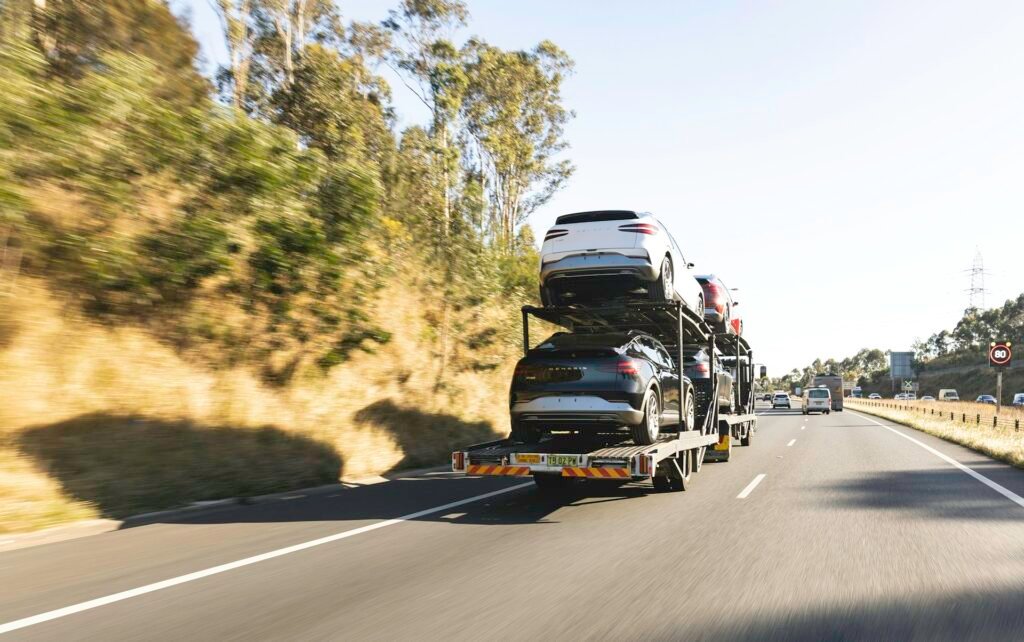
Can I leave stuff in the car?
Most carriers do not allow personal belongings in the car, and carrier insurance generally does not cover them. Some allow a small amount in the trunk, but ask first. After a road trip, it is tempting to leave souvenirs in the back seat. Pack them instead.
Open or enclosed for a road-trip car?
For most daily drivers and SUVs, open car shipping is safe, fast to schedule and the lowest cost. Most cars on the highway are moved this way.
If your road-trip car is a classic convertible, a sports car or a new EV with a premium finish, enclosed car shipping protects it from weather and road debris. Enclosed typically costs about $800–$2,900 depending on distance. Driving a classic along Route 66 and shipping it home enclosed is a popular combo. For electric cars, see our EV shipping guide for charge-level tips.
Picking the pickup and delivery spot
Most shipments are door to door, meaning the driver gets as close to your address as safely possible. On a road trip, your "door" might be a hotel, a friend's home or a parking lot.
- Choose a spot with room for a large truck. Big carriers can be 70+ feet long and may not fit on narrow or gated streets.
- Hotels and large retail lots often work well, but get permission first.
- Keep your phone on. Drivers usually call ahead before arrival.
- Someone 18 or older must be there to sign the Bill of Lading and hand over or receive the keys.
Learn more about door-to-door car shipping and how drivers handle tight locations.
How to save money on one-way road-trip shipping
- Book early. One to two weeks ahead gives the most carrier options.
- Be flexible. A wider pickup window lets the carrier fit your car on an efficient load.
- Use major metro areas. Pickup and delivery near big cities and interstates is usually cheaper than rural locations.
- Choose open transport unless your car truly needs enclosed.
- Compare written quotes. CTS offers a Best Price Guarantee: show a lower written quote and we will match or beat it.
Frequently asked questions
How much does it cost to ship a car one way for a road trip?
Typically about $500–$1,900 on an open carrier and $800–$2,900 enclosed, depending on distance, route, season and vehicle size. Short regional routes cost less, and coast-to-coast routes sit at the higher end.
Can I fly and have my car waiting when I land?
Yes. Book the shipment so delivery happens a day or two before you arrive, and have someone receive it, or choose the guaranteed delivery date option if your schedule is fixed.
Is it cheaper to ship my car or drive it back?
On short trips, driving is usually cheaper. On long trips, especially cross-country, shipping often comes out close once you count fuel, hotels, meals, time off work and added miles on your car.
Do I need to be there for pickup and delivery?
Not necessarily. Any adult you trust can hand over or receive the car and sign the Bill of Lading. Just let your shipping company know who it will be.
What if my road trip runs late and I miss the pickup window?
Call your shipping company as soon as you know. With notice, pickup can often be moved a day or two. Without notice, the carrier may have to leave without your car and rebook it on a later load.
Can I track my car while I am on my trip?
Yes. CTS provides 24/7 in-transit updates, so you can check on your car's progress while you are on the road or back at home.
Planning a one-way drive? Tell us your route and dates and get a free quote with $0 deposit to book.
Updated November 4, 2026