
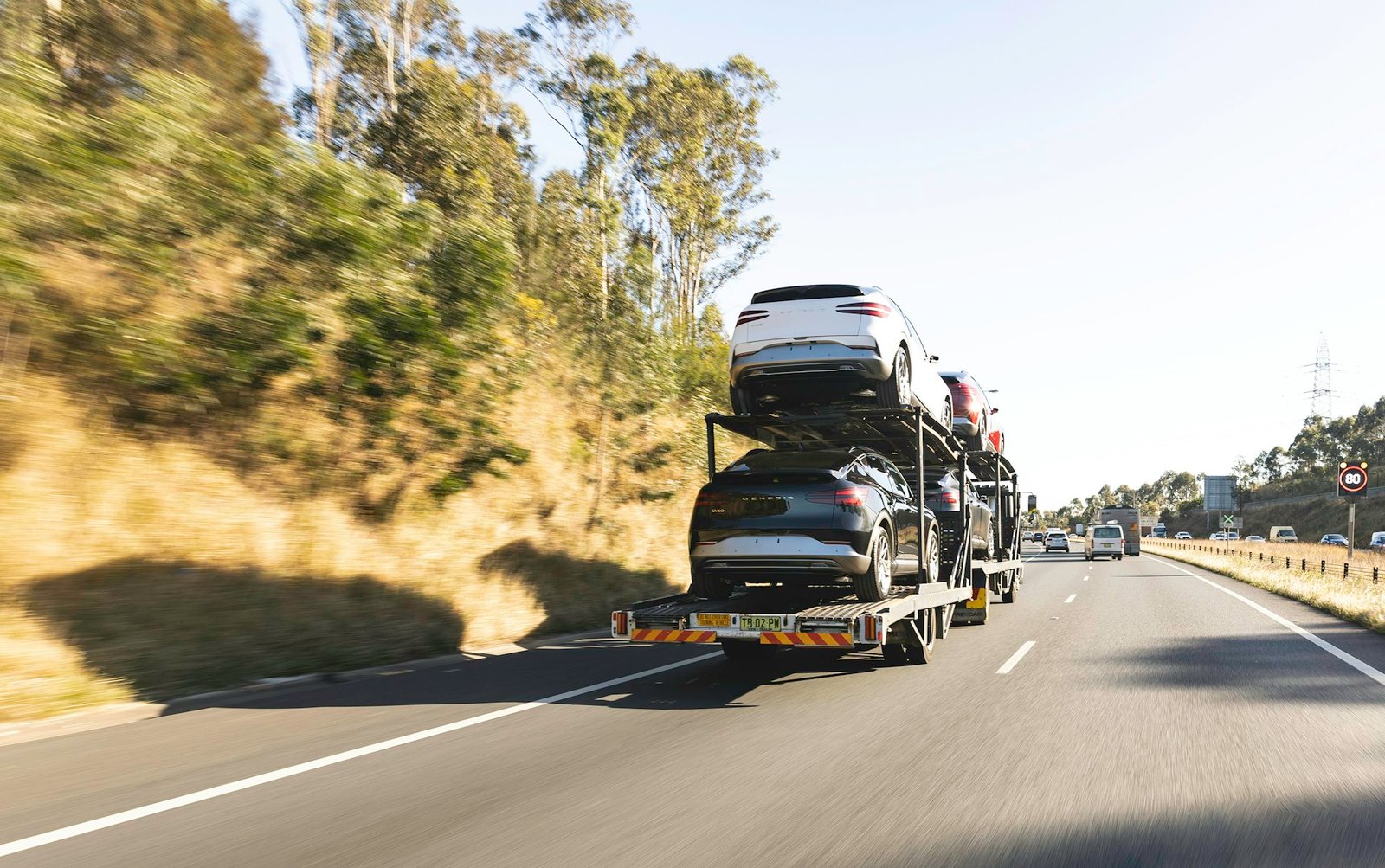
You can ship a financed car to another state without paying off the loan or getting the lender's approval for the transport itself. The lender holds a lien on the title, not control over where you drive or ship the car, so the main tasks are keeping your insurance active, updating your address with the lender, and coordinating the title when you register in your new state.
Key takeaways
- A car loan does not stop you from shipping the car within the U.S. You do not need to pay it off first.
- Most loan contracts require you to keep full coverage insurance and to tell the lender when your address changes.
- Registering in a new state usually means the lender sends the title (or electronic title record) to your new DMV. Request it early because it can take a few weeks.
- Shipping to Hawaii is different: ocean carriers typically require a lienholder authorization letter before loading.
- If you are buying a financed car from a dealer or private seller in another state, ship it after the deal closes and the paperwork is in order.
Can you ship a car that still has a loan?
Yes. When you finance a car, the bank, credit union or finance company becomes the lienholder. Their name is on the title as having a security interest until the loan is paid. You are still the owner and the registered user of the car.
A lien is about getting paid. It gives the lender the right to repossess if you stop making payments. It does not give them a say in whether your car rides on a truck from Ohio to Arizona. Auto transport companies do not ask for loan paperwork for moves between states on the mainland.
That said, your loan contract is a legal agreement, and it may include rules you need to follow when you move. Reading it now saves headaches later. For a general overview of the booking process, see how car shipping works.
Financed vs. leased: a quick difference
With a loan, you own the car and the lender has a lien. With a lease, the leasing company owns the car outright. That is why lease contracts sometimes have stricter out-of-state rules. If you lease, our guide to shipping a leased car covers those details.
What your loan contract may require
Loan agreements vary by lender, but most include a few standard clauses. Look for sections called "Insurance," "Use of Vehicle," "Address Change" or "Default."
- Address change notice: Many lenders require you to update your address within a set time after moving. Some ask to be told before the car is moved out of state.
- Insurance requirement: Lenders almost always require collision and comprehensive coverage, list themselves as loss payee, and set a maximum deductible.
- Keeping the car in the U.S.: Some contracts limit taking the car out of the country. That does not affect state-to-state moves.
- Default triggers: Letting insurance lapse or failing to register the car can sometimes count as a default. Avoid both during your move.
When in doubt, call the lender's customer service line, tell them your new address and move date, and ask what they need from you.
Insurance during transport
Licensed carriers must carry cargo insurance, which covers damage the carrier causes while the car is in their care. Your own auto policy still matters, because your loan requires it and because it protects you before pickup and after delivery.
Keep your policy active from start to finish. Do not switch to storage-only coverage unless your lender approves it in writing, since dropping collision coverage can violate many loan agreements. After the car arrives, update your garaging address with your insurer. Rates and required coverages differ by state.
If you have GAP insurance, it remains in force as long as the loan and your primary policy are active. Ask your insurer to confirm if you are changing companies as part of the move.
Title and registration in your new state
This is where a financed car takes the most planning. Most states require new residents to register their car within a set number of days after moving, often between 10 and 60 days. The deadline depends on your new state, so confirm it with the official DMV or motor vehicle agency there.
How the title gets to your new DMV
Since the lender holds the title (or an electronic title record), you cannot simply hand it to the DMV yourself. The process usually looks like this:
- You visit or contact your new state's DMV and start a title transfer for an out-of-state vehicle.
- The DMV or you request the title from the lienholder. Some states send the request directly; others ask you to do it.
- The lender mails the title to the DMV, or releases the electronic record.
- The new state issues a title showing the same lender as lienholder, plus your new registration and plates.
This back-and-forth often takes two to six weeks. Some states issue a temporary registration while you wait. Start the request as soon as you have a new address, even before the car arrives.
Inspections, emissions and VIN checks
Some states require a safety inspection, emissions test or VIN verification for vehicles coming from out of state. Shipping the car door to door gets it to your home, but you will still need to take it to the inspection station or DMV yourself. Check your new state's requirements on its official site.
| Task | When to start | Who handles it |
|---|---|---|
| Tell lender about new address | As soon as you know your move date | You |
| Confirm insurance stays active | Before booking transport | You and your insurer |
| Book car shipping | 2–3 weeks before pickup | You and the transport company |
| Request title for new state | Right after you arrive | You, DMV and lender |
| Inspection or VIN check | Within your state's deadline | You |
| Update insurance garaging address | When the car arrives | You |
Cost to ship a financed car
Having a loan does not change the price of shipping. Cost depends on miles, route, vehicle size, open versus enclosed transport, the season and how flexible your dates are. Typical ranges are about $500 to $1,900 for open transport and $800 to $2,900 for enclosed, and prices vary by route and timing. Short trips under 500 miles usually take 1 to 3 days, while coast-to-coast moves typically take 7 to 10 days.
Get a ballpark with our car shipping cost calculator. CTS takes $0 deposit to book, and our Best Price Guarantee means we will match or beat a lower written quote. That helps keep your moving budget in check while you are still making car payments.
Should you choose open or enclosed?
Most financed cars are everyday vehicles that ship well on an open carrier, which is the most common and affordable option. If the car is new, high-value or has a light-colored finish you want to protect from road grime, enclosed transport adds protection. Either way, your loan does not require a specific method.

Buying a financed car from out of state
Many people finance a car they found online at a dealer or from a private seller in another state. In that case, the car usually ships after the sale is finished.
Buying from a dealer
Dealers often handle the loan paperwork and temporary tags. Ask the dealer whether they will process title and registration for your home state, or whether you will do it at your local DMV. Then schedule pickup from the dealer lot. Our online car buyer shipping page covers coordinating with dealers.
Buying from a private seller who still owes money
If the seller still has a loan, the lien must be paid off before the title can transfer to you. Many buyers handle this at the seller's bank, or through the lender's payoff process, so the money goes straight to the lienholder. Do not ship the car until you have a clear plan for the title. Once the paperwork is settled, the carrier can pick up from the seller's address.
Refinancing during a move
If you refinance with a new lender while moving, the title has to move from the old lender to the new one. That can delay registration. If possible, finish the refinance before you move or wait until you are registered in your new state.
Shipping a financed car to Hawaii or Alaska
Shipping a financed car to Hawaii involves an ocean carrier, and those carriers typically require a notarized or signed letter from the lienholder authorizing the car to be shipped. They also usually ask for your registration and photo ID. Requests can take one to three weeks, so ask the lender as soon as you book. Learn more on our Hawaii car shipping page.
For Alaska, requirements depend on the route and whether the car travels by road or by sea. Ask about lienholder paperwork when you get a quote.
Cars with GPS trackers or starter interrupt devices
Some lenders, especially those offering buy-here-pay-here or subprime loans, install a GPS tracker or a starter interrupt device on the car. If yours has one, tell the lender before the car ships. A car suddenly moving hundreds of miles on a truck can look unusual on their screen, and a device that blocks the engine from starting can leave the driver unable to load or unload the car.
Ask the lender to note your move in your account and confirm the device will not shut off the car during transport. Also mention the device when you book, so the carrier knows the car must be able to start and roll on its own. If the car cannot run, it will need a carrier with a winch, which can change the price.
Prep checklist before pickup
- Keep your loan payments current during the move. A missed payment while the car is in transit can cause real problems.
- Have your registration, insurance card and loan account number handy.
- Remove personal items, toll tags and parking passes.
- Leave about a quarter tank of fuel.
- Note any existing dings and take date-stamped photos from every angle.
- Check tires, battery and fluids, and disable car alarms if possible.
- Follow our full vehicle shipping checklist for more steps.
Frequently asked questions
Do I need to pay off my car loan before shipping it?
No. You can ship a financed car within the U.S. while the loan is active. Just keep your payments and insurance current.
Do I need the lender's permission to ship my car?
For mainland moves, usually not for the transport itself. Many loan contracts do require you to update your address, so let the lender know you are moving. Shipping to Hawaii typically requires a lienholder letter.
Will the transport company ask for my loan documents?
No, not for state-to-state moves. The carrier needs pickup and delivery details, a contact person and access to the car. Ocean shipping to Hawaii is the main exception.
How long does it take to get my title to a new state?
Often two to six weeks, depending on the lender and the state. Electronic title states can be faster. Start the process as soon as you move.
What happens if my car is damaged during shipping?
Note the damage on the bill of lading at delivery and take photos. The carrier's cargo insurance is responsible for damage it causes. Tell your lender and insurer if the repair is significant, since they are listed on your policy.
Moving with a car that still has a loan? Get a free quote today. There is no deposit to book, and you will get 24/7 updates from pickup to delivery.
Updated November 4, 2026