
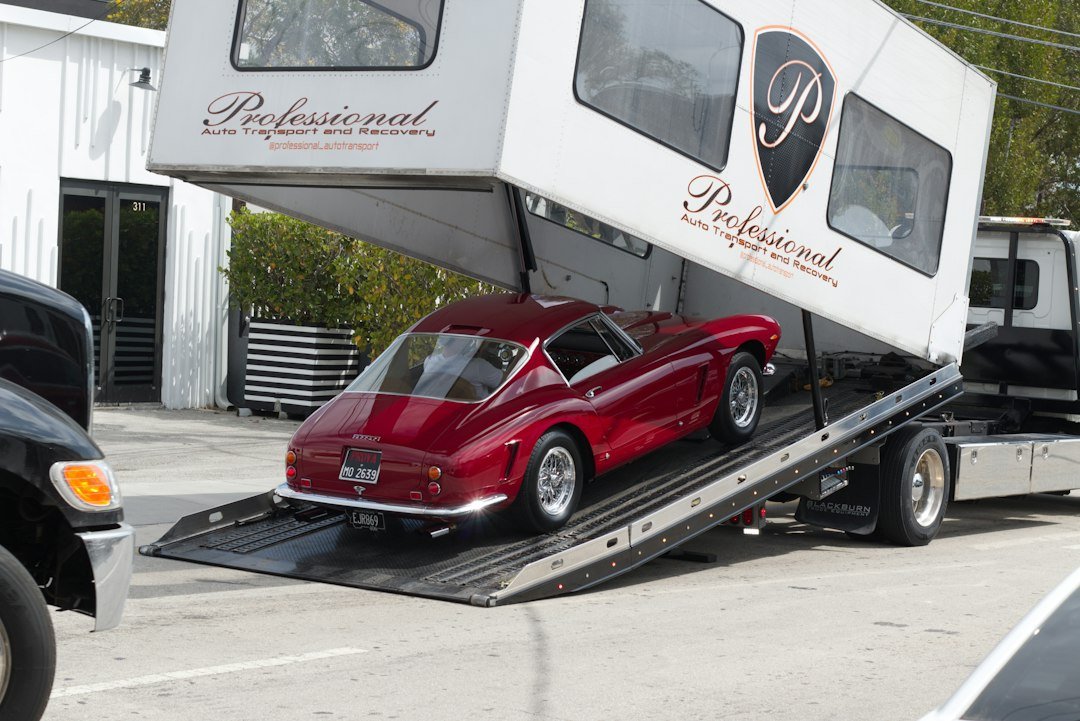
Car shipping works in six basic steps: you get a quote, book your shipment, a licensed carrier is assigned, the driver inspects and loads your car, it travels to its destination, and you inspect it again at delivery before paying any balance due. Most shipments are picked up within 1 to 5 days of booking and take 1 to 10 days in transit depending on distance. This guide walks through every step so you know exactly what happens and what to do along the way.
Key takeaways
- Most car shipments are arranged by a broker, who matches your car with a licensed, insured carrier.
- Expect a pickup window of a few days, not an exact hour, unless you pay for guaranteed timing.
- The Bill of Lading inspection at pickup and delivery is your most important record. Check it carefully.
- Transit typically takes 1–3 days for trips under 500 miles and 7–10 days coast to coast.
- Note any new damage on the Bill of Lading before the driver leaves, then report it promptly.
Who does what: brokers, carriers and you
Before you start, it helps to know who is involved. There are three main players in almost every car shipment.
The broker
A broker is a licensed company that arranges your shipment. Brokers do not own the trucks. Instead, they connect you with a carrier that is already running your route, check that carrier's authority and insurance, set the price, and stay in touch with you until delivery. Brokers must be registered with the Federal Motor Carrier Safety Administration (FMCSA). CTS Auto Transport shipments are arranged by Niki Auto Transport (USDOT 4535689, MC 1799148), and we work with a network of more than 100,000 licensed and insured carriers.
The carrier
The carrier is the trucking company or owner-operator that physically moves your car. Carriers must have their own operating authority and cargo insurance. Many are small businesses with one to a few trucks.
You (the shipper)
Your job is to give accurate details, have the car ready, be available (or have someone you trust available) at pickup and delivery, and inspect the car both times. That is it. You do not need to deal with permits or route planning.
The car shipping process at a glance
| Step | What happens | Typical timing |
|---|---|---|
| 1. Quote | You share route, vehicle and dates; you get a price | Minutes |
| 2. Booking | You confirm details and sign the shipping order | Same day |
| 3. Carrier assignment | Your shipment is matched with a licensed carrier | Same day to a few days |
| 4. Pickup and inspection | Driver inspects, records condition and loads the car | Within your pickup window |
| 5. Transit | Your car travels; you get updates | 1–10 days, by distance |
| 6. Delivery | You inspect, sign and pay any balance due | Within the delivery window |
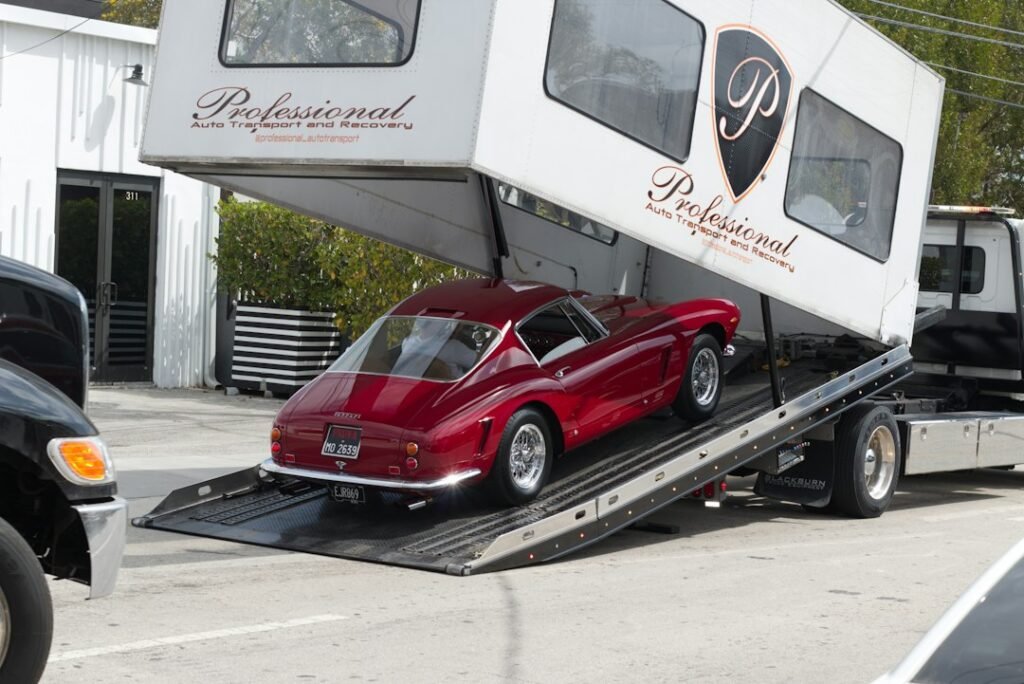
Step 1: Get a quote
To give you an accurate price, a shipper needs a few basic details:
- Pickup and delivery ZIP codes (or full addresses)
- Year, make and model of the vehicle
- Whether it runs, steers and brakes
- Any changes that affect size, such as a lift kit, oversized tires or a roof rack
- Open or enclosed transport
- Your first available pickup date
Quotes for a standard sedan in 2026 typically range from about $500 to $1,900 on an open carrier and $800 to $2,900 enclosed. Our guide to car shipping costs explains what moves the price. When you compare companies, look for a written, all-in price and ask whether it can change after you book. CTS backs its prices with a Best Price Guarantee.
Choosing open or enclosed
Open carriers are the standard for most cars and the most affordable choice. Enclosed trailers protect your car from weather and road debris and are best for classic, luxury and exotic vehicles. Not sure which you need? Compare open car shipping and enclosed car shipping.
Step 2: Book your shipment
Once you accept a quote, you confirm the details: contact names at both ends, exact addresses, dates and any special notes, like a narrow street or a gated community. You will sign a shipping order or agreement. Read it. A good agreement spells out:
- The total price and when each part is due
- The pickup window and estimated delivery window
- Your cancellation terms
- How damage claims are handled
With CTS, there is $0 deposit to book. If you need a firm date, you can add a guaranteed delivery date option.
Step 3: Carrier assignment and dispatch
Next, your shipment is offered to carriers who are running your route during your window. The broker checks that the carrier has active operating authority and cargo insurance, then confirms the job. This is called dispatch.
How fast this happens depends on your route and timing. On busy routes between major cities, a carrier may be assigned the same day. In most large metros, same-day pickup is available. Rural pickups, unusual vehicles and peak seasons can take a few days longer.
Once your carrier is assigned, you should get the carrier's name and an estimated pickup time. The driver usually calls 12 to 24 hours before arriving to set a more exact time.
Step 4: Pickup and the Bill of Lading
Pickup day is the most important part of the whole process, because this is when your car's condition is recorded.
The inspection
The driver walks around the car with you and marks existing scratches, dents, chips and other damage on a form called the Bill of Lading (BOL). Many drivers now use an electronic BOL with photos. Walk with the driver, point out anything they miss, and make sure every note is accurate before you sign. Then take your own dated photos of every side, the roof, the wheels, the interior and the odometer.
Loading
The driver drives or winches the car onto the trailer and secures it with straps or chains. You keep one copy of the BOL. Hand over one key. The driver does not need your garage remote, house keys or a full key ring.
Getting the car ready
Before pickup, wash the car so damage is easy to see, remove personal items and toll tags, leave about a quarter tank of fuel or less, and disable any car alarm. Our full vehicle shipping checklist covers every step.

Step 5: Transit and tracking
Once loaded, your car rides along with other vehicles on the carrier's route. Drivers usually make several pickups and drop-offs on the way, so the truck will not drive straight to your door. Federal hours-of-service rules also limit how long a driver can be on the road each day, which is why a 2,800-mile trip takes longer than a nonstop drive.
| Distance | Typical transit time |
|---|---|
| Under 500 miles | 1–3 days |
| 500–1,000 miles | 2–5 days |
| 1,000–2,000 miles | 4–8 days |
| Coast to coast | 7–10 days |
Weather, road closures, mechanical issues and delays at other stops can add a day or two. CTS customers get 24/7 in-transit updates, so you are never left guessing where your car is.
Step 6: Delivery and final inspection
The driver will call ahead, usually about a day before arrival and again when close. Big trucks cannot always reach narrow or dead-end streets, so you may meet the driver at a nearby parking lot. This is normal for door-to-door car shipping.
What to check at delivery
- Walk around the car with your copy of the pickup BOL and your photos.
- Check every panel, the roof, bumpers, glass, wheels and the interior.
- Check the odometer against your pickup photo.
- Note any new damage on the delivery BOL before you sign it.
- Take photos of any new damage while the driver is still there.
- Pay any balance due by the method agreed in your booking.
If you sign a clean BOL and later find damage, a claim becomes much harder to prove. Try to schedule delivery in daylight, or bring a strong flashlight.
What if something goes wrong?
Damage during car transport is uncommon, but it can happen. If you find new damage, note it on the BOL, take photos and contact your shipper right away. The carrier's cargo insurance is the primary coverage while your car is on the truck. Your shipper should help you file the claim with the carrier and keep it moving. CTS backs every shipment with a 100% satisfaction or money-back promise, and coverage up to $2 million is available for high-value vehicles.
Delays are more common than damage. If your pickup or delivery slips, ask your shipper for the new estimated time and the reason. Most delays are measured in hours or a day or two, not weeks.
Special situations
- Buying a car online or at auction: you will need a release form and the gate pass or lot number. See dealer and auction car shipping.
- Military moves: PCS timing can be tight. Our military car shipping page covers the details.
- Hawaii: cars cross the ocean by ship, with port drop-off and pickup. Read about Hawaii car shipping.
- Someone else at pickup or delivery: any trusted adult can sign the BOL for you. Give their name to your shipper ahead of time.
How to choose a car shipping company
Because the process depends so much on who arranges it, a few minutes of research up front pays off. Before you book with anyone, check these points:
- Look up their numbers. Every licensed broker and carrier has a USDOT number and an MC number. You can look them up for free on the FMCSA website to confirm the authority is active.
- Ask about insurance. Ask how much cargo coverage the carrier has and whether you can see proof before pickup.
- Get the price in writing. A clear, all-in price with no deposit is a good sign. Be careful with quotes far below everyone else's.
- Ask how they handle delays and claims. A good shipper will explain the process plainly before you need it.
- Read the agreement. Look for cancellation terms and whether the price is locked once you book.
Still have questions? Our car shipping FAQs cover dozens of common ones.
Frequently asked questions
How far in advance should I book car shipping?
Two to three weeks ahead is ideal for the best price and schedule. Many shipments can still be arranged within a few days, and same-day pickup is available in most major metro areas.
Do I need to be there for pickup and delivery?
Someone needs to be there, but it does not have to be you. Any trusted adult can hand over the keys, do the inspection and sign the Bill of Lading.
Can I put things in my car?
Most carriers allow a small amount of items in the trunk, but personal belongings are not covered by cargo insurance and extra weight can add cost. Remove valuables and anything loose.
What documents do I need to ship a car?
For most domestic shipments you only need the keys and a signed Bill of Lading. Carriers generally do not need your title. Ports for Hawaii shipments and auctions have extra paperwork, so ask your shipper.
Will the truck come right to my house?
Whenever it is safe and legal for a large truck. If your street is too narrow or has low trees or tight turns, the driver will arrange to meet you nearby.
Ready to get started? Get a free quote today. There is no deposit to book, and you will get updates from pickup to delivery.
Updated November 4, 2026