

Dealership inventory transfers between states are usually handled by open car carriers that move several vehicles at once, at a typical cost of about $500 to $1,900 per unit depending on distance, with lower per-unit rates possible on full loads and regular lanes. Dealers use transfers to fill gaps in their lineup, complete dealer trades, deliver sold units to out-of-state buyers, and move auction purchases to their lots. Getting it right comes down to clear release paperwork, accurate condition reports, and a carrier partner that hits your timelines.
Key takeaways
- Open carriers handle most dealer transfers; enclosed is used for high-line, exotic and collector inventory.
- Moving several units on one load usually lowers the per-vehicle cost.
- Condition reports on the bill of lading protect both the sending and receiving store.
- Release forms, gate passes and key handoffs cause most pickup delays; set them up before dispatch.
- Title and dealer plate rules differ by state, so confirm requirements with each state's motor vehicle agency.
Why dealers move inventory across state lines
Few dealerships can stock every trim and color customers ask for. Moving vehicles between stores and states keeps the lot full of what sells. Common reasons include:
- Dealer trades: Swapping units with another dealer to get a customer's exact build.
- Group balancing: Multi-rooftop groups moving aged units to stores where they sell faster.
- Auction purchases: Moving wholesale buys from the auction to the lot or reconditioning center.
- Out-of-state retail sales: Delivering sold units to customers in other states.
- Seasonal demand: Sending convertibles south in the fall and 4x4s north before winter.
- Lease returns and wholesale: Moving off-lease or wholesale units to buyers or remarketing sites.
Our dealer and auction car shipping page covers the services CTS offers dealerships.
Transfer types and how they are usually shipped
| Transfer type | Typical trailer | Typical lead time | Key paperwork |
|---|---|---|---|
| Dealer trade (single unit) | Open, often added to a partial load | 1–5 days | Trade agreement, release, BOL |
| Group store balancing (multiple units) | Open, full or partial load | Several days to 2 weeks | Internal transfer sheet, BOL per unit |
| Auction to lot | Open | 1–7 days; watch storage deadlines | Gate pass, buyer number, BOL |
| Sold unit to out-of-state customer | Open or enclosed | Based on promised delivery date | Release, delivery contact, BOL |
| High-line, exotic or collector | Enclosed, often with liftgate | Several days to 2 weeks | Release, insurance certificate, BOL |
Lead times vary with route, season and how many units are moving. Busy interstate lanes between large metro areas fill fastest.

What dealer transfers cost
Per-vehicle pricing for open transport generally runs about $500 to $1,900, and enclosed about $800 to $2,900. Dealer pricing depends on:
Distance and lane
Routes between major markets are cheaper per mile because carriers run them often. A short transfer between neighboring states may only take a day, while a coast-to-coast move usually takes 7 to 10 days.
Number of units
A single unit is priced as one spot on someone else's load. Several units from the same origin to the same destination are cheaper per vehicle, and a full load can be scheduled more tightly.
Vehicle type
Full-size trucks, large SUVs and vans take more room and weight than sedans. Heavy-duty pickups with long beds may need specific spots on the trailer. Share bed length, dually status and any upfits when booking.
Condition
Non-running units need a winch, which usually adds cost. Flag any no-start, dead battery or flat tire issues before dispatch.
Season and timing
Rates generally rise in summer and during snowbird season on north-south routes. Rush orders and same-day pickup cost more than flexible windows. For tight timelines, expedited car shipping is available.
CTS offers a Best Price Guarantee for dealers too: show us a lower written quote for the same service, and we will match or beat it.
Paperwork and compliance
Paperwork is where most dealer transfers slow down. Get these pieces lined up before the truck is dispatched.
Release and gate passes
The sending store or auction must release the vehicle to the carrier. Provide the release number, stock number, VIN and a contact name. Auctions usually require a gate pass before a unit can leave the lot.
Bill of lading
The bill of lading is the shipping contract and condition report. Each unit should have its condition recorded at pickup, including existing scratches, dents, chips and missing parts. The receiving store compares the car with that report at delivery.
Titles and MSOs
Titles and manufacturer's statements of origin usually travel separately from the vehicle, by courier or through your title service. Do not leave title documents in the car.
State rules
Each state has its own rules for dealer licensing, dealer plates, temporary tags and titling of out-of-state units. Some states require a VIN inspection or emissions check before a used vehicle from another state can be titled or sold. Requirements change, so confirm with the motor vehicle agency in each state involved, and with your dealer association if you have questions.
Carrier authority and insurance
Verify that your broker and carriers hold active federal operating authority and adequate cargo insurance. CTS shipments are arranged by Niki Auto Transport (USDOT 4535689, MC 1799148), using a network of more than 100,000 licensed and insured carriers. Coverage up to $2 million is available for high-value loads.
Pickup and delivery checklist for dealers
Share this checklist with your lot porters, inventory managers and receiving staff.
- Confirm the unit list: VIN, stock number, year, make, model, color and run status for each vehicle.
- Stage the units together in an area a full-size carrier can reach.
- Tag the keys with stock numbers and keep them in one place for the driver.
- Remove dealer plates unless your state allows them to travel with the unit, and remove loose items and marketing materials.
- Check batteries and tires, especially on aged units that have been sitting.
- Take photos of each unit at pickup and attach them to the deal or transfer file.
- Inspect with the driver and confirm the bill of lading is accurate for every unit.
- Set receiving hours and a named receiver at the destination store.
- At delivery, inspect every unit before signing, and note any new damage on the bill of lading with photos.
For more detail on vehicle prep, see our vehicle shipping checklist.
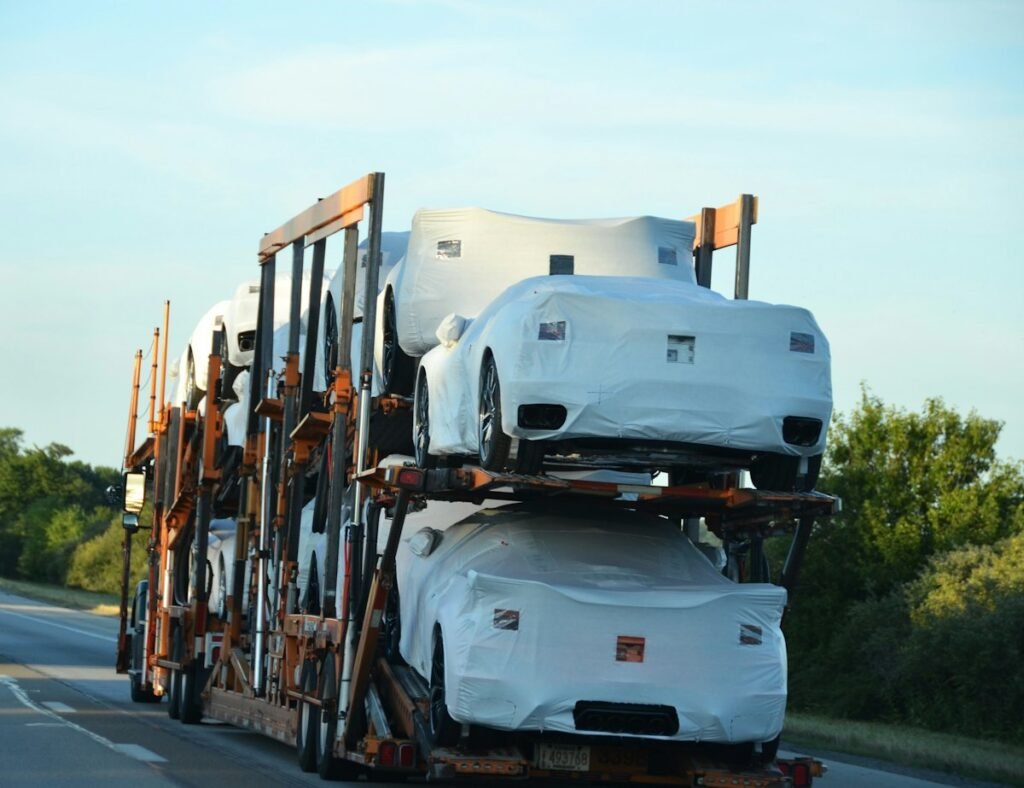
Open vs. enclosed for dealer inventory
Open car shipping is how most new and used inventory moves across the country. It is efficient and cost-effective for everyday units. Enclosed car shipping makes sense for:
- Exotic and high-line units where paint condition affects sale price.
- Collector and low-mileage vehicles.
- Low-clearance cars that need a liftgate instead of steep ramps.
- Units delivered directly to a high-end retail customer.
For exotics and supercars, our luxury and exotic car shipping service uses enclosed trailers.
Handling damage on dealer transfers
Even with careful drivers, damage can happen. A clear process keeps claims simple:
- Note it on delivery. Any new damage must be written on the bill of lading before signing. Claims are much harder once the BOL is signed clean.
- Photograph immediately with time stamps, close-ups and wide shots.
- Compare with pickup records. This is where detailed pickup photos pay off.
- Report quickly. Notify your shipping coordinator right away so the claim can be filed with the carrier's insurer.
- Get repair estimates from your service or body shop.
Building a reliable transfer program
Dealers who move vehicles every week benefit from a simple, repeatable process:
- One point of contact at the dealership who books and tracks transfers.
- Standard lanes between your stores or common auction sites, so pricing and timing are predictable.
- Batching: Grouping units on the same lane to fill trucks and lower costs.
- Tracking: CTS provides 24/7 in-transit updates, so sales staff can give customers accurate delivery dates.
- Guaranteed dates when it matters: Use a guaranteed delivery date option for sold units with a promised delivery.
- Clear billing: CTS asks for $0 deposit to book, which keeps cash flow simple.
To understand each step of a shipment, see how car shipping works.
Delivering sold units to out-of-state customers
Selling to buyers in other states is one of the fastest-growing reasons dealers ship cars. It also puts your store's reputation on the line, because the delivery is the customer's first in-person experience with the vehicle.
Set realistic delivery dates
Promise a delivery window, not a single hour. Transit for trips under about 500 miles usually takes 1 to 3 days after pickup, and coast-to-coast trips usually take 7 to 10 days. If the customer needs a firm date, book a guaranteed delivery date option and build in a small buffer for weather.
Prepare the customer
Tell the buyer what to expect before the truck arrives. They should know that a large carrier may need to meet them at a nearby open lot, that they will inspect the car with the driver, and that any new damage must be written on the bill of lading before they sign. A short delivery guide in your deal jacket or follow-up email helps a lot.
Keep the paperwork separate
Send titles, registration paperwork and temporary tags through your normal process rather than leaving them in the car. Confirm with the customer how and when those documents will arrive, and remind them to check their own state's registration deadline with the local motor vehicle agency.
Present the car well
Detail the vehicle and do a final walk-around before pickup. Open transport exposes the car to road dust, so some dealers arrange a quick wash at delivery or ask the customer to visit a local car wash on the store. For high-line units, enclosed transport keeps the car showroom-ready.
Frequently asked questions
How much does it cost to transfer a dealer vehicle between states?
Open transport typically runs about $500 to $1,900 per unit depending on distance, vehicle size and season. Multiple units on the same lane usually cost less per vehicle.
How fast can a dealer trade be picked up?
Same-day pickup is available in most metro areas, and many dealer trades are picked up within a few days. Rural locations and tight windows may take longer or cost more.
Should titles travel with the vehicle?
No. Titles and MSOs should be sent separately by courier or through your title process. Keep them out of the vehicle.
Can you ship non-running dealer units?
Yes. Non-running units need a carrier with a winch, which usually adds to the price. Tell your coordinator the run status when booking.
What happens if a unit arrives damaged?
Note the damage on the bill of lading before signing, take photos and contact your shipping coordinator right away. The claim is filed with the carrier's cargo insurance.
Need to move one unit or a full load? Send us your VINs and lanes, and we will build a plan around your timelines. Get a free quote today.
Updated November 4, 2026