

To buy a car from a private seller out of state, verify the car and title, get an independent inspection, pay through a secure method tied to the title transfer, collect a signed title and bill of sale, then either drive the car home with a temporary permit or have it shipped. You'll usually pay sales tax and register the car in your home state, not the seller's. Planning the paperwork and pickup before money changes hands is what keeps the deal smooth.
Key takeaways
- Confirm the seller's name matches the title and check for liens before you agree on a price.
- Hire your own pre-purchase inspector near the seller; it often costs about $100–$300.
- You typically pay sales tax and register in your home state, usually within a set deadline.
- Pay in a way that's traceable and happens at the same time as the title handoff.
- Shipping avoids temporary tags, insurance gaps and a long drive in an unfamiliar car.
Why buy from a private seller in another state?
Private sellers often price below dealers because they have no overhead or dealer fees. Looking beyond your state also widens your options for specific models, trims and colors. Cars from dry, warm states can come with less rust than cars from snowy regions that use road salt.
The trade-off: no dealer handles the paperwork, there's no warranty, and the car is far away. This guide walks you through each step so nothing falls through the cracks.
Step 1: Find the car and screen the seller
Ask the right questions early
Before you get attached, ask the seller:
- What's the VIN?
- Is the title in your name, and is it in your possession?
- Is there a loan or lien on the car?
- Is the title clean, or is it salvage, rebuilt or otherwise branded?
- Why are you selling?
- Do you have service records?
- Can I have an independent mechanic inspect it?
Honest sellers answer these easily. Dodging any of them is a reason to slow down.
Run the VIN
Use the VIN to pull a vehicle history report and check for open recalls on the NHTSA website. The National Insurance Crime Bureau's free VINCheck can flag cars reported stolen or as total losses. Make sure the VIN on the listing matches the dash plate, door jamb sticker and title.

Step 2: Inspect the car from a distance
Since you can't see the car in person, hire someone who can. An independent pre-purchase inspection (PPI) from a mobile inspector or a local shop near the seller usually costs about $100–$300, more for specialty vehicles. It should include a road test, a scan for trouble codes, and a look underneath for rust, leaks and frame damage.
Pair the inspection with a live video call. Ask the seller to cold-start the car, show the dashboard with no warning lights, and walk slowly around it in daylight. For a complete approach to remote buying, see our tips in the online car buyer shipping guide.
Step 3: Understand the paperwork
The paperwork is where out-of-state private sales get tricky, because two states' rules can apply: the seller's state for how the title is signed over, and your state for how you register the car.
Documents you'll typically need
| Document | Who provides it | Why it matters |
|---|---|---|
| Certificate of title, signed over to you | Seller | Proves ownership transfer. Required to register. |
| Bill of sale | Seller and buyer | Records price, date, VIN and parties; often used for sales tax. |
| Odometer disclosure | Seller | Federal law requires it for many vehicles; often built into the title. |
| Lien release | Seller's lender | Shows any loan is paid off. |
| Seller's ID (copy or photo) | Seller | Confirms the seller matches the name on the title. |
| Proof of insurance | Buyer | Usually needed to register and to drive the car. |
| Emissions, safety or VIN inspection | Buyer (in home state) | Required in some states for cars coming from out of state. |
Title signing rules vary
Some states require the seller's signature on the title to be notarized. Others don't. Some titles have specific spots for the sale price and odometer reading. A mistake, like signing in the wrong spot or using correction fluid, can void the title and force the seller to apply for a duplicate. Check the seller's state DMV website for exactly how to complete their title.
Your home state's rules
Many states typically give you a window, often around 30 days, to title and register a newly bought car. Some states, including California, require a VIN verification for vehicles coming from out of state, and many states have emissions or safety inspections. Always confirm the current rules with your own state's DMV before you buy.
Step 4: Handle sales tax correctly
In most cases, a private-party buyer pays sales or use tax to their home state when registering the car, not to the seller's state. The tax is usually based on the purchase price listed on the bill of sale, though some states use a book value instead. A few states have no sales tax on vehicles, and rates differ widely. Your DMV or state revenue department can tell you the exact amount.
Be honest about the price on the bill of sale. Writing a lower number to cut taxes can cause problems if the state checks it against a valuation guide, and it's illegal.
Step 5: Pay safely
When the seller is hundreds of miles away, the hardest part is making sure the money and the title change hands at the same time. Some good options:
- Meet at the seller's bank or lender. If you or a trusted friend can be there, the bank can verify funds, pay off any loan and handle the title release.
- Use a reputable escrow service. Funds are held until conditions are met. Find and verify the escrow company yourself, never through a link from the seller.
- Pay the lender directly. If there's a lien, sending the payoff straight to the lender helps make sure the title is released.
- Wire only after verification. Confirm the seller's identity, the title and wiring details by phone at a number you found independently.
Avoid gift cards, cryptocurrency, and payment apps meant for friends and family. These are hard to reverse and common in scams.
If the car has a loan
The lender holds the title until the loan is paid. Many lenders mail the title to the new owner or the seller after payoff, which can take days or weeks. Get the lender's payoff letter, agree in writing on who receives the title, and keep copies of everything.
Step 6: Get the car home
Once the car is paid for, you have two main choices: fly out and drive it back, or ship it.
Driving it home
Driving can work for shorter distances. You'll need to sort out a few things first:
- Plates. In many states, the plates stay with the seller. You may need a temporary tag or transit permit from the seller's state or your own. Rules vary, so check with both DMVs.
- Insurance. Add the car to your policy before you drive it.
- Mechanical risk. A long road trip in a car you just met is the worst time to discover a problem the inspector missed.
- Costs. Flight, fuel, hotels, meals and time off work add up.
Shipping it
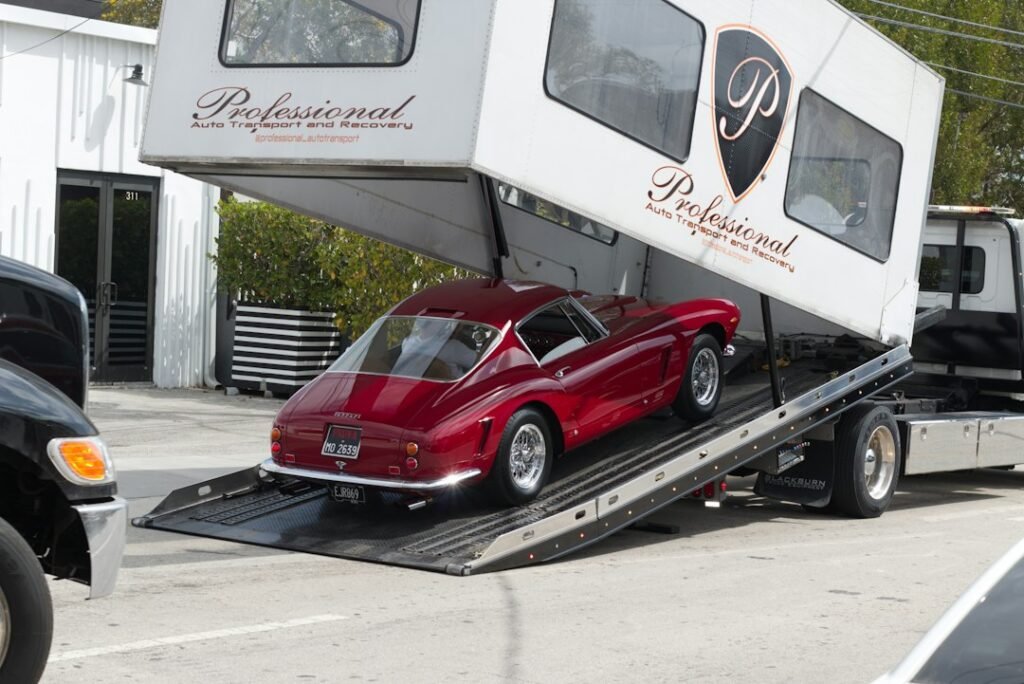
Shipping skips the temporary tag hassle and the long drive. A carrier picks the car up from the seller and delivers it to you. Typical costs run about $500–$1,900 on an open carrier and $800–$2,900 enclosed, depending on distance. Transit is usually 1–3 days for trips under 500 miles and 7–10 days coast to coast. You can estimate your route with our car shipping cost calculator, and state-to-state car shipping explains how interstate moves work.
Coordinating pickup with a private seller
Private-sale pickups go smoothly when everyone knows the plan. Here's what to set up:
- Confirm payment has cleared and the seller is ready to release the car.
- Share the seller's contact info and address with the transport company, along with times they're available.
- Agree on keys. All keys and fobs should go with the car.
- Decide on the title. Have the seller mail it to you by tracked mail, or hand it to someone you trust. Don't leave it in the car.
- Ask the seller to walk around with the driver. The car's condition gets noted on the Bill of Lading at pickup.
- Remove the seller's plates if their state requires it, and remove any toll tags.
- Track the shipment. CTS provides 24/7 in-transit updates.
Same-day pickup is available in most metro areas, which helps when the seller has a tight schedule.
Common mistakes to avoid
- Paying before verifying the seller's ID matches the title.
- Skipping the inspection because the photos look great.
- Letting the seller pick the inspector or the shipping company.
- Assuming the seller's state rules apply to your registration.
- Driving away without insurance or a valid temporary tag.
- Missing your state's registration deadline and owing late fees.
Out-of-state private purchase checklist
- VIN matches the listing, dash, door jamb and title
- History report, recall check and theft check done
- Independent inspection completed and reviewed
- Seller ID matches the title; lien status confirmed
- Seller's state title-signing rules checked (notary, odometer, price)
- Bill of sale signed by both parties
- Secure payment method agreed and completed
- Insurance added before pickup or delivery
- Transport booked or temporary tag obtained
- Home-state registration, tax and inspection steps confirmed
For the transport portion, our vehicle shipping checklist covers prep, pickup and delivery inspection.
Frequently asked questions
Do I pay sales tax in my state or the seller's state?
Typically you pay sales or use tax in your home state when you register the car. Confirm with your DMV or state revenue department, since rules and rates differ.
Can I register a car bought out of state without the title?
Usually not. Most states need the original signed title to issue a new one in your name. If a lender has the title, you'll need it released after the loan payoff.
Does the seller need to be there when the car is picked up?
Someone needs to hand over the keys and sign the Bill of Lading. That's usually the seller, but it can be another trusted person they authorize.
How long do I have to register a car bought from another state?
It varies by state, but many typically allow around 30 days. Check your DMV's website for the exact deadline to avoid late fees.
Is it cheaper to ship the car or fly out and drive it?
For short distances, driving can be cheaper. For longer trips, once you add airfare, fuel, hotels, meals and time off, shipping is often close in cost and far less hassle.
Bought a car from a seller in another state? Get a free quote and we'll pick it up from the seller's door. There's no deposit, and our Best Price Guarantee means we'll match or beat a lower written quote.
Updated November 4, 2026