

If your car is damaged during shipping, the carrier's cargo insurance is normally responsible for paying to repair it, as long as you document the damage on the Bill of Lading at delivery and file a claim promptly. Damage is uncommon, but the steps you take in the first 30 minutes after your car arrives decide how smoothly a claim goes. This guide walks you through what to do before pickup, at delivery and afterward, so you are protected either way.
Key takeaways
- The carrier's cargo insurance is the main coverage for damage that happens while your car is on the truck.
- The Bill of Lading (BOL) is your most important document. Note every new scratch or dent on it before you sign at delivery.
- Take dated photos and video of all sides of the car at pickup and again at delivery.
- Report damage to the carrier and your broker the same day, and file the written claim within the window they give you, often a few days.
- Most claims for minor damage settle with a repair estimate and photos; bigger claims can take a few weeks.
How common is damage during car shipping?
Most cars arrive in the same condition they left. Carriers move vehicles every day, and the drivers who last in this business are careful because damage costs them money and reputation. Still, a car on a truck is exposed to road debris, weather and the loading process, so small problems can happen.
When damage does occur, it is usually minor and cosmetic. Serious structural damage is rare. Knowing the usual types helps you check the right spots at delivery.
The most common types of transport damage
- Rock chips and small paint marks on the hood, bumper or windshield, mostly on open carriers.
- Scuffs on bumpers or lower trim from loading ramps, especially on low cars.
- Undercarriage scrapes on lowered sports cars or vehicles with front splitters.
- Small dents or scratches from straps, chains or tie-down points.
- Fluid drips from a vehicle loaded above yours on a two-level open trailer.
- Mirror or antenna damage if they were not folded or removed.
Some issues are not transport damage at all. A dead battery after a long trip, a low tire from a slow leak, or an old chip you had not noticed are common sources of confusion. That is exactly why documentation matters so much.
Who pays if your car is damaged?
Understanding who covers what is the key to a fast claim. Three types of coverage can come into play, and they work in a set order.
1. The carrier's cargo insurance (primary)
Every legitimate auto carrier is required to carry liability insurance, and reputable carriers also carry cargo insurance that covers the vehicles they haul. Cargo coverage commonly runs from about $100,000 to $250,000 per load on open trucks, and higher on many enclosed carriers. This policy is the first place a damage claim goes.
When you book through CTS, your shipment is arranged by Niki Auto Transport (USDOT 4535689, MC 1799148) with licensed and insured carriers, and coverage up to $2M is available for high-value vehicles. Ask for the carrier's certificate of insurance before pickup if you want to see the limits yourself.
2. Your own auto insurance (secondary, sometimes)
Some personal auto policies extend comprehensive coverage to a car while it is being transported. Others do not. It is worth a quick call to your insurer before you ship. If the carrier's claim stalls or falls short, your own policy may help, though you would usually pay your deductible.
3. The broker's role
A broker arranges the shipment and matches you with a carrier. The broker is not usually the insurer of the cargo, but a good broker helps you file the claim, contacts the carrier on your behalf and keeps pressure on the process. That support is a real reason to work with an established broker.
| Coverage source | What it usually covers | What it usually does not cover |
|---|---|---|
| Carrier cargo insurance | Damage caused by loading, unloading, the trailer, straps, accidents, or carrier negligence | Pre-existing damage, personal items in the car, mechanical failure not caused by transport |
| Your personal auto policy | May cover transit damage under comprehensive, depending on your policy | Varies widely; deductible applies |
| Broker | Claim support, communication and carrier vetting | Usually not a direct insurer of the vehicle |

Before pickup: how to protect yourself from day one
The best claim is one you can prove in minutes. That proof starts before the driver ever arrives. Our vehicle shipping checklist covers full prep, but these are the steps that matter most for damage protection.
Wash the car
Dirt hides scratches. A clean car lets you, and the driver, see the true condition. Wash it a day or two before pickup.
Take detailed photos and video
- Shoot all four sides, all four corners, the roof, hood, bumpers and wheels.
- Get close-ups of any existing chips, dents or curb rash.
- Take a photo of the odometer and the dashboard with the engine on (to show no warning lights).
- Record a slow walk-around video in daylight. Make sure your phone saves the date and time.
Prep the vehicle
- Fold in mirrors and remove or lower antennas.
- Remove loose exterior parts like bike racks, toppers or custom spoilers that could come loose.
- Take out personal items. Carrier insurance generally does not cover belongings left inside.
- Leave about a quarter tank of fuel or less.
- Note any leaks or mechanical issues so the driver knows.
Choose the right transport type
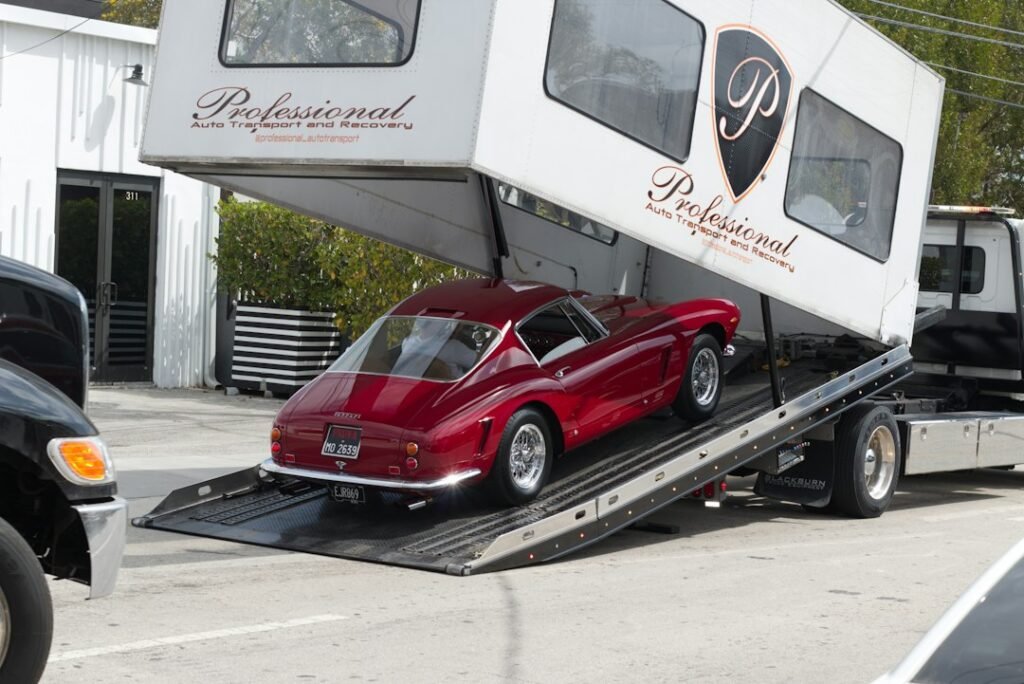
If your car is new, rare or expensive, the type of trailer matters. Enclosed car shipping protects against road debris and weather, and many enclosed carriers use liftgates that keep low cars off steep ramps. For most daily drivers, open car shipping is safe and costs less. Typical prices run about $500–$1,900 for open and $800–$2,900 for enclosed, depending on distance and vehicle.
The Bill of Lading: your most important document
The Bill of Lading is the inspection report and receipt for your shipment. At pickup, the driver marks existing damage on a vehicle diagram. You both sign it. At delivery, you compare the car to that same report.
Here is the rule that trips people up: if you sign the delivery BOL as "clean" without noting new damage, it becomes very hard to prove the damage happened in transit. The signed BOL is treated as your acceptance of the car in the listed condition.
- At pickup, make sure every existing mark is noted, and ask for a copy (paper or digital).
- Do not sign a blank or incomplete inspection.
- At delivery, write any new damage on the BOL before you sign, even if it seems small.
- If the driver says "we'll sort it out later," still write it down.
What to do at delivery if you find damage
Stay calm and be thorough. The driver may be on a tight schedule, but you have the right to inspect your car before you sign. If delivery is at night, use a strong flashlight and ask the driver to move the car under a light if possible.
Step-by-step at delivery
- Inspect before signing. Walk around the whole car, using your pickup photos as a guide. Check the roof, lower bumpers and under the front end.
- Note every new issue on the BOL. Be specific: "3-inch scratch, rear driver-side door" is far better than "scratch."
- Take photos right away with the truck visible in the background if you can. Time-stamped photos at the delivery spot are strong evidence.
- Get the driver's signature on the noted damage and keep your copy.
- Accept the car. Refusing delivery usually makes things harder and can add storage costs. Noting damage protects you; refusing the car does not.
- Pay any balance owed as agreed. Withholding payment can complicate the claim. Your remedy is the claim, not the payment.
What if you find damage after the driver leaves?
Some damage is hard to see in the dark or rain. If you spot something later, photograph it immediately and contact your broker and the carrier the same day. A claim without a BOL note is harder, but not always impossible, especially if your pickup photos clearly show the panel was undamaged and you report quickly.
How to file a damage claim
Once the damage is noted, the claim itself is mostly paperwork. Move fast. Many carriers set a short reporting window, often a few days to a couple of weeks, so check your shipping agreement for the exact deadline.
What to include in your claim
- A copy of the pickup and delivery Bill of Lading with the damage noted
- Pickup photos showing the area was undamaged
- Delivery photos showing the new damage
- One or two written repair estimates from licensed body shops
- Your order or booking confirmation
- A short, factual description of what you found and when
Typical claim timeline
| Stage | Typical timing | What happens |
|---|---|---|
| Report damage | Same day as delivery | Notify the driver (on the BOL), the carrier and your broker |
| Submit written claim | Within the carrier's window, often a few days | Send photos, BOL and estimates |
| Carrier review | About 1–3 weeks | Carrier checks documents and may request an inspection |
| Settlement | Small claims often within a few weeks; larger ones can take longer | Carrier pays directly or sends it to its insurer |
These times vary by carrier and claim size. Minor cosmetic claims are often settled directly by the carrier without involving its insurance company, which is usually faster. Larger claims may involve an adjuster.
Deductibles and what to expect
Carrier cargo policies have deductibles. Many carriers pay small claims out of pocket to avoid using insurance at all. You should not be asked to pay the carrier's deductible for damage they caused. If there is a dispute, your broker can help mediate.
What is not covered
Knowing the limits upfront avoids frustration later. Claims are usually denied when:
- The damage was listed as pre-existing on the pickup BOL.
- The delivery BOL was signed clean and there is no other proof.
- The damage was to personal items left in the car.
- The problem was mechanical wear, such as a battery, brakes or a worn tire.
- Loose or aftermarket parts came off because they were not secured or removed before pickup.
- The damage was caused by an act of nature on an open carrier, depending on the policy terms.
How to lower your risk before you book
You cannot remove all risk, but you can stack the odds in your favor.
- Book with a licensed, insured company. Check the USDOT and MC numbers with the FMCSA.
- Ask about insurance limits and request the carrier's certificate of insurance.
- Use enclosed transport for luxury, exotic, classic or freshly painted cars. See our guides to luxury and exotic car shipping and classic car shipping.
- Request top-load placement on open carriers so nothing can drip on your car.
- Be present (or send someone you trust) at pickup and delivery so inspections are done properly.
Read how car shipping works for a full picture of the process, from quote to delivery.
A quick damage-protection checklist
- Wash the car 1–2 days before pickup.
- Take dated photos and a walk-around video.
- Remove personal items and loose accessories.
- Make sure the pickup BOL lists all existing marks; keep a copy.
- Inspect fully at delivery, in good light.
- Note any new damage on the BOL before signing.
- Photograph new damage on the spot.
- Report to the carrier and broker the same day.
- Get repair estimates and file the written claim before the deadline.
Frequently asked questions
Is my car insured while it is being shipped?
Yes. Licensed carriers must carry insurance, and reputable ones carry cargo coverage for the vehicles they haul. That cargo policy is the primary coverage for transport damage. Your own auto policy may also apply, so check with your insurer.
Should I refuse delivery if my car is damaged?
Usually no. Refusing the car can create storage fees and slow things down. The better move is to accept the car, note every new issue on the Bill of Lading, take photos and then file a claim.
How long do I have to report shipping damage?
It depends on the carrier and your shipping agreement, but windows can be short, sometimes just a few days. Note damage on the BOL at delivery and report it the same day to be safe.
What if I signed the Bill of Lading without noting damage?
Your claim will be harder, but report it right away anyway. Clear, time-stamped pickup photos and a quick report can still help. This is why careful inspection before signing is so important.
Does enclosed shipping prevent damage?
Enclosed transport greatly reduces exposure to rock chips, weather and road debris, and many enclosed trucks use liftgates for low cars. It does not remove every risk, but it is the safest option for high-value vehicles.
Will the broker help with my claim?
A good broker should. While the carrier's insurance pays the claim, the broker can collect documents, contact the carrier and help resolve disputes. CTS also backs shipments with a 100% satisfaction or money back promise.
Want a shipment that starts with clear paperwork, insured carriers and live updates from pickup to delivery? Get a free quote in under a minute, with $0 deposit to book.
Updated November 4, 2026