

For trips under about 500 miles, driving your car yourself is almost always cheaper than shipping it. Past roughly 1,000 miles, the gap narrows fast: once you add fuel, hotels, meals, wear and tear, and the days you spend on the road, shipping a car coast to coast (typically about $1,200–$1,900 on an open carrier) often costs about the same as driving, and sometimes less. The right answer depends on your distance, your car, and how much your time is worth.
Key takeaways
- Driving is usually cheaper for short trips, especially if you can do it in one day.
- On long trips, hotels, meals and wear and tear can push driving costs past $1,400.
- Shipping adds near-zero miles, which protects resale value and lease mileage limits.
- Don't forget the hidden costs of driving: time off work and the risk of breakdowns or tickets.
- If you're moving a family, flying while the car ships can be the fastest and least stressful plan.
What goes into the cost of driving
Most people only think about gas. Here's the full list of what a long road trip actually costs.
Fuel
Divide the distance by your car's miles per gallon, then multiply by the price of gas. A 2,800-mile trip in a car that gets 25 mpg uses about 112 gallons. At $3.30 a gallon, that's about $370. A pickup truck at 18 mpg would use about 156 gallons, or around $515.
Lodging
Most people can safely drive about 450–550 miles a day. A cross-country trip usually means 4 or 5 nights in hotels. At $120–$180 a night, that's roughly $480–$900.
Food
Plan on about $40–$60 per person per day for road meals and snacks. For a 5-day trip with one driver, that's around $200–$300.
Wear and tear
Every mile uses up a bit of your tires, brakes and oil, and adds to depreciation. A rough way to estimate maintenance and tire wear is about $0.10–$0.20 per mile, not counting depreciation. For reference, the IRS standard business mileage rate, which covers fuel, maintenance and depreciation together, has been around $0.67–$0.70 per mile in recent years. Your actual costs depend on your car.
Time
Five days of driving can mean five days of unpaid leave or vacation time. Even if you don't put a dollar amount on it, it's a real cost.
Other costs
- Tolls, which can add up fast on Northeast and some Florida and Texas routes.
- Parking at hotels in cities.
- An oil change or service before and after the trip.
- Repairs if something breaks far from home.
What goes into the cost of shipping
Car shipping is quoted as one price that covers the truck, driver, fuel and the carrier's insurance. What changes the price:
- Distance and route. Longer trips cost more overall but less per mile. Busy routes between big cities are cheaper than rural ones.
- Vehicle size. SUVs and trucks take more space and weight.
- Trailer type. Open carriers are the most affordable. Enclosed costs more but protects against weather and road debris.
- Season. Summer and snowbird seasons can raise prices on popular routes.
- Running condition. Non-running cars need a winch, which adds a fee.
- Speed. Expedited shipping or a guaranteed delivery date costs extra.
Typical prices run about $500–$1,900 for open transport and $800–$2,900 for enclosed. If you're relocating, you'll also need a way to get yourself there, usually a one-way flight.

Side-by-side cost comparison by distance
Below are example estimates for one driver in a midsize sedan getting 25 mpg. They assume $3.30 per gallon, about 500 miles of driving per day, $140 per hotel night, $50 per day for food, and $0.10–$0.20 per mile for wear and tear. Shipping figures are typical open-carrier ranges. Real costs vary by route, season and vehicle, so use this as a guide, not a quote.
| Trip | Fuel | Hotels | Food | Wear and tear | Estimated cost to drive | Typical cost to ship (open) |
|---|---|---|---|---|---|---|
| 300 miles (1 day) | ~$40 | $0 | ~$25 | $30–$60 | ~$95–$125 | ~$500–$800 |
| 1,000 miles (2 days) | ~$130 | ~$140 | ~$100 | $100–$200 | ~$470–$570 | ~$800–$1,200 |
| 2,000 miles (4 days) | ~$265 | ~$420 | ~$200 | $200–$400 | ~$1,085–$1,285 | ~$1,000–$1,500 |
| 2,800 miles (5–6 days) | ~$370 | ~$560–$700 | ~$250–$300 | $280–$560 | ~$1,460–$1,930 | ~$1,200–$1,900 |
What the numbers show
On a short trip, driving wins easily. At around 1,000 miles, driving is still cheaper on paper, but the gap is a few hundred dollars plus two days of your time. Past 2,000 miles, the costs are often close, and shipping can come out ahead once you count time off work, an extra night on the road, or a gas-hungry vehicle. If you're relocating, remember to add a one-way flight to the shipping column.
For a quote on your exact route, use our car shipping cost calculator.
Costs that don't show up in the table
Resale value and lease limits
Mileage is one of the biggest factors in a used car's value. Adding 2,800 miles in one week can lower what a dealer will pay at trade-in. For leased cars, extra miles can lead to per-mile overage charges when you turn the car in. Shipping adds almost no miles.
Risk on the road
Long drives mean more exposure to crashes, rock chips, weather, speeding tickets and breakdowns in places where repairs are expensive. With shipping, your car is strapped to a trailer and covered by the carrier's cargo insurance. CTS works with licensed and insured carriers, and coverage up to $2M is available for high-value vehicles.
Driver fatigue
Driving 8–10 hours a day for several days in a row is tiring, especially alone or with kids. Fatigue is a real safety risk.
Multiple cars
If your family has two cars, driving both means two drivers, double fuel, and double wear. Shipping one or both can save a lot of hassle.
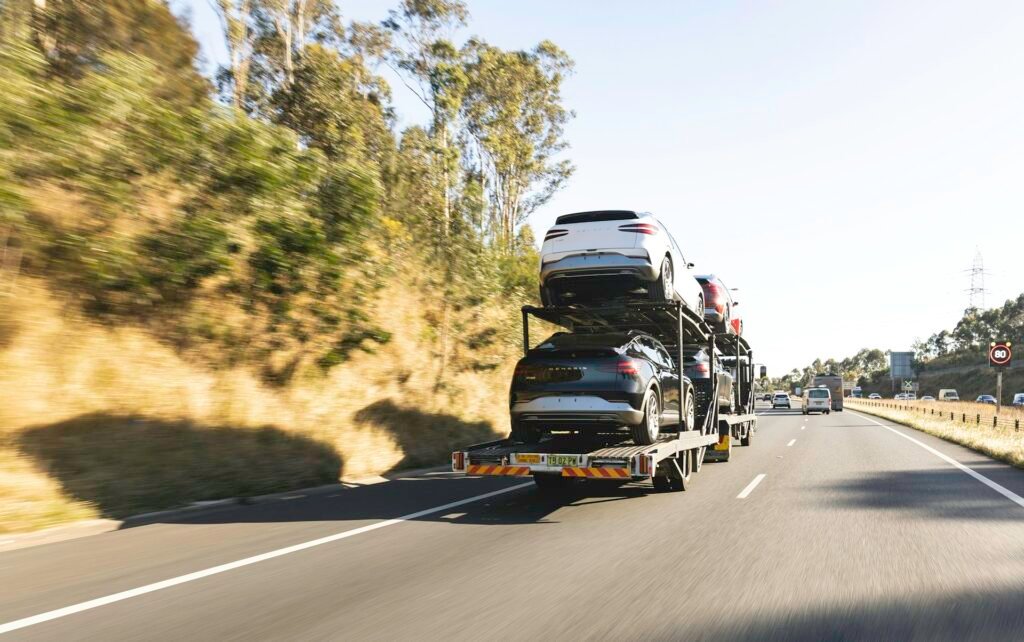
Three real-world scenarios
Numbers in a table are helpful, but your situation decides the answer. Here's how the math tends to play out for a few common moves. All figures are estimates and vary.
Solo mover, New York to Los Angeles
A single driver in a compact sedan faces about 2,800 miles, 5 nights in hotels and 6 days on the road. Driving costs roughly $1,460–$1,930 before counting lost work days. Shipping on an open carrier typically runs about $1,200–$1,900, plus a one-way flight. If this person would otherwise take a week of unpaid leave, shipping usually wins. If they want a road trip and have the time, driving can be a fun option at a similar price.
Family of four, Chicago to Florida
This trip is about 1,200 miles, or two long days. Fuel for a minivan or SUV might be around $160–$200, plus one hotel night and meals for four people at about $50 each per day. Food alone can top $400. Driving still often comes out cheaper than shipping, but the gap shrinks, and two days in a car with kids is its own kind of cost. Some families split it: one parent drives the main car while the second car ships.
Snowbird, Northeast to Florida every winter
A retiree driving 1,200 miles twice a year adds about 2,400 miles a year and makes four long travel days. Shipping both ways costs more on paper, but saves the drive on busy I-95, the hotel stops and the wear. Many snowbirds book shipping early in the season, since popular dates fill up and prices rise.
Ways to cut the cost of either option
If you drive
- Get an oil change and check tire pressure before you leave; proper inflation helps fuel economy.
- Use gas price apps to find cheaper fuel along the route.
- Pack food and drinks instead of eating every meal out.
- Book hotels a little outside big cities, where rates are often lower.
If you ship
- Choose open transport unless the car really needs enclosed protection.
- Give a flexible pickup window of a few days.
- Book a couple of weeks ahead, especially in summer or snowbird season.
- Meet the driver at a spot near a major highway if your street is hard for a big truck to reach.
- Compare written quotes. CTS will match or beat a lower written quote under its Best Price Guarantee.
When driving makes more sense
- The trip is under about 500 miles and you can do it in a day.
- You want a road trip and have the time to enjoy it.
- Your car is older and extra miles won't change its value much.
- You're towing a trailer or need the car packed with belongings.
- You have flexible time off and enjoy driving.
When shipping makes more sense
- The move is long distance or cross-country.
- The car is new, leased, low-mileage, or a classic or exotic.
- You'd rather fly and arrive in hours instead of days.
- You're moving more than one car.
- You're a snowbird making the same trip every year. See our snowbird car shipping page.
- You're a student or service member with limited time. Many students and military families ship to save days of travel.
- You're going to Hawaii, where driving isn't an option.
How to calculate your own ship vs. drive cost
Run your own numbers with this quick checklist:
- Find the distance. Use a map app to get total miles.
- Estimate fuel. Miles ÷ your mpg × current gas price.
- Count nights. Miles ÷ 500, rounded up, minus one. Multiply by your hotel rate.
- Add food. Days × people × daily food budget.
- Add wear and tear. Miles × $0.10–$0.20, or more for trucks and luxury cars.
- Add tolls and extras. Check your route for toll roads.
- Value your time. Days on the road × what a day off costs you.
- Get a shipping quote. Add a one-way flight if you're relocating.
- Compare. Then factor in risk, stress and resale value.
Timing: how long does each take?
Driving coast to coast typically takes 5–6 days at a safe pace. Car shipping takes about 7–10 days coast to coast once picked up, and 1–3 days for trips under 500 miles. The difference is that while the car ships, you can fly and start your new life the same day. Same-day pickup is available in most metro areas, and you can follow your car with 24/7 in-transit updates. Our guide on how car shipping works explains the full timeline.
Frequently asked questions
Is it cheaper to ship a car or drive it across the country?
It's often close. Driving coast to coast typically costs about $1,460–$1,930 once you add fuel, hotels, meals and wear and tear, while open-carrier shipping typically runs about $1,200–$1,900. Shipping wins if you count time off work or drive a vehicle with poor gas mileage.
At what distance does shipping become worth it?
For many people, somewhere past 1,000 miles. Under 500 miles, driving is almost always cheaper unless you need the car moved without you.
Does shipping a car add miles?
Only a tiny amount from driving it on and off the trailer. The car rides on the truck the rest of the way.
How much does wear and tear cost per mile?
A rough estimate for tires, oil and maintenance is about $0.10–$0.20 per mile, not counting depreciation. The IRS standard mileage rate, which includes fuel and depreciation, has been around $0.67–$0.70 per mile in recent years.
Can I ship my car and fly at the same time?
Yes. Many people schedule pickup a few days before they leave, then fly. Your car arrives at your new address, usually within 7–10 days on a coast-to-coast route.
Want to know what shipping costs on your route? Get a free quote with $0 deposit. If you find a lower written quote, our Best Price Guarantee will match or beat it.
Updated November 4, 2026