
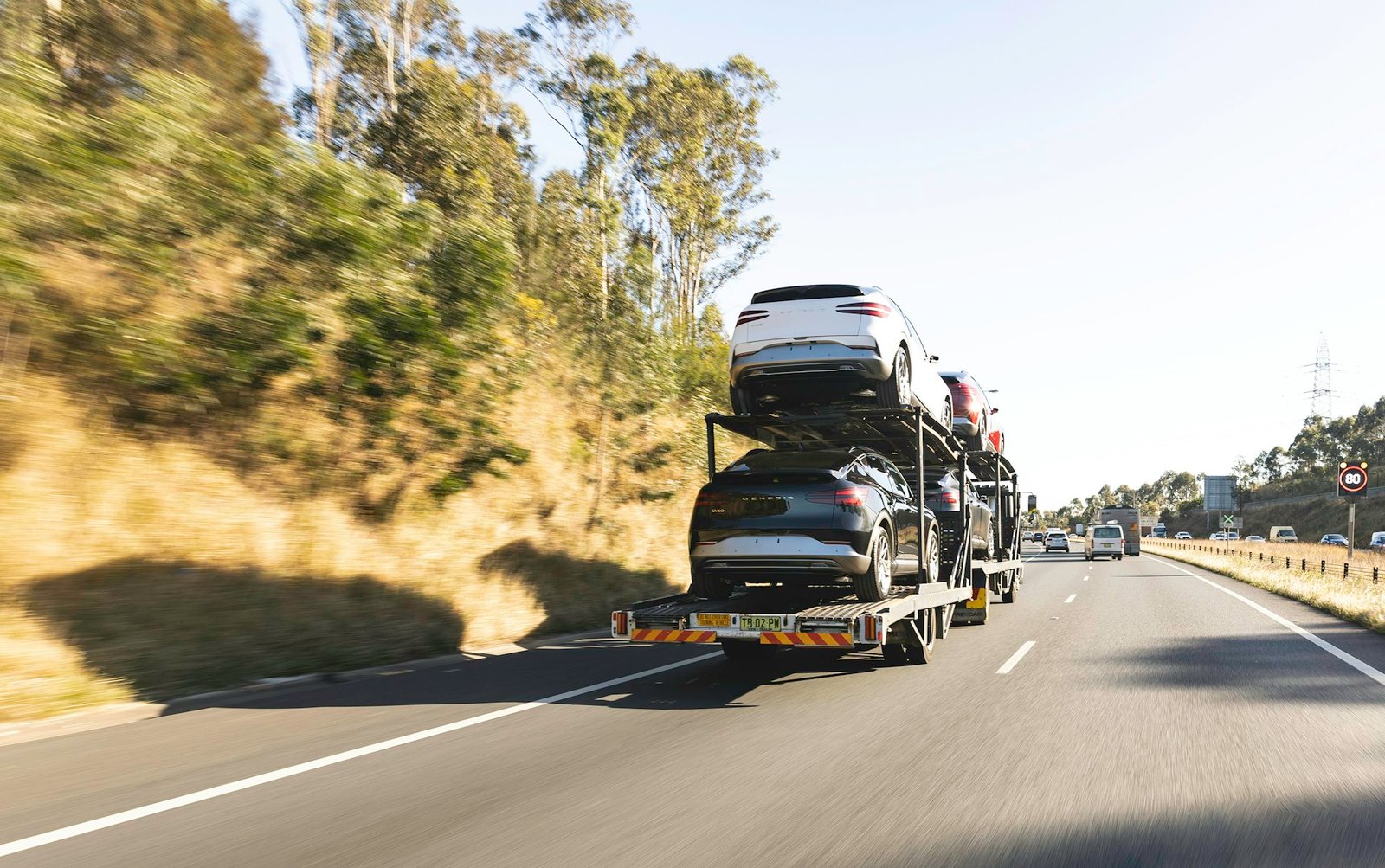
A full-size car carrier is about 75 to 80 feet long, 8.5 feet wide and up to about 13.5 feet tall, so the safest pickup spot is a wide, level, open area the truck can drive into and out of without backing up a long way. Good choices include large retail or grocery store parking lots (with permission), truck-friendly business parks after hours, and wide main roads near your home. Narrow streets, low trees, cul-de-sacs, steep driveways and gated communities often are not safe for a big rig.
Key takeaways
- Most car carriers are 75–80 feet long, so they need room to enter, park and leave going forward.
- Low branches, power lines, tight turns and steep slopes are the most common reasons a truck cannot reach a home.
- Big parking lots, wide commercial streets and truck stops are the most common meeting spots.
- Check HOA, gated community and local truck rules before pickup day.
- "Door-to-door" means as close as the truck can safely get; small trucks can reach many tight spots for a little more.
Why a big car carrier cannot always reach your door
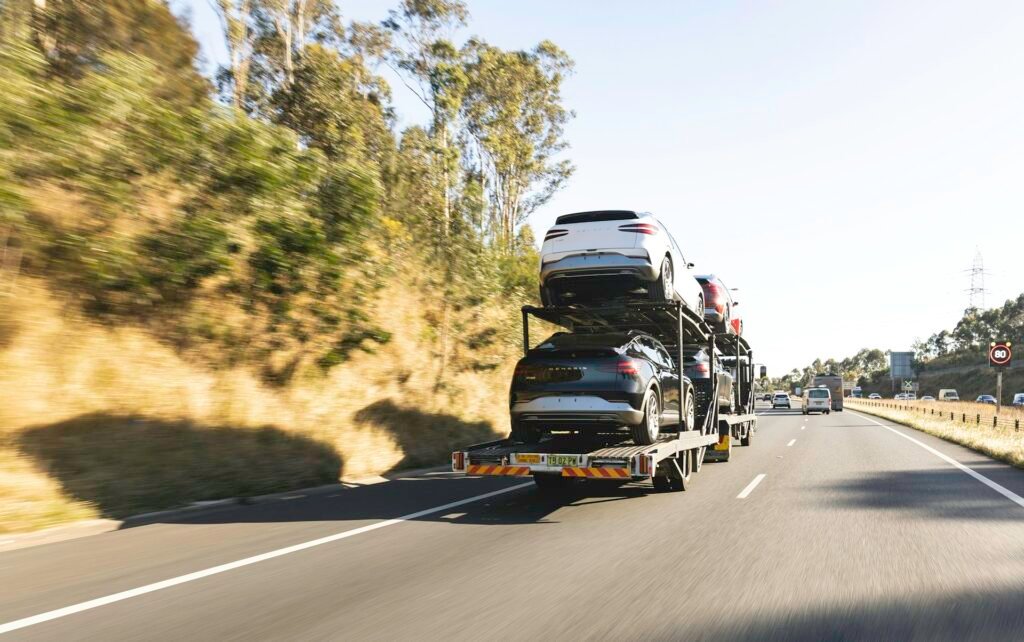
A typical open carrier that hauls 7 to 10 cars is a tractor plus a long trailer. Fully loaded, it can weigh close to the federal 80,000-pound limit on interstate highways. That size makes it efficient on the highway, but it creates problems on residential streets.
| Truck type | Typical length | Typical cars | Reaches tight streets? |
|---|---|---|---|
| Full-size open carrier | About 75–80 ft | 7–10 | Often not |
| Enclosed multi-car carrier | About 70–80 ft | 2–7 | Often not |
| Small hotshot or wedge trailer | About 40–50 ft | 1–3 | Usually yes |
| Flatbed or rollback tow truck | About 25–35 ft | 1 | Yes |
Drivers know their rigs and will not take a street they believe could cause damage, get them stuck, or break local rules. Asking them to try anyway can lead to broken branches, damaged mailboxes, or a truck blocking the road for an hour.
What door-to-door really means
Door-to-door car shipping means the driver will come as close to your address as is safe and legal. On many suburban streets, that is right in front of your home. In older neighborhoods, cities and gated areas, it often means a nearby parking lot a few minutes away. That is normal and does not mean the service changed.
Things that make a street unsafe for a large carrier
Look at your street with fresh eyes before pickup day. These are the issues drivers check for most.
Height problems
- Tree branches lower than about 14 feet over the road.
- Low power, cable or phone lines.
- Low bridges, overpasses or parking structure entrances.
Width and turning problems
- Narrow roads with cars parked on both sides.
- Tight 90-degree turns or roundabouts.
- Dead ends and cul-de-sacs that force the truck to back out.
Ground and slope problems
- Steep hills, which make loading unsafe.
- Soft shoulders, gravel or dirt roads, especially after rain.
- Weight-limited bridges or private roads.
Rule problems
- "No trucks" or weight limit signs on local streets.
- HOA rules that ban commercial vehicles.
- Gated communities with guards who will not let a big rig in.
- City streets with no legal place to stop.
The best places to meet a car carrier
If your street is a problem, the driver will usually suggest a meeting place nearby. You can make it easier by having a few options ready.
| Location | Why it works | Watch out for |
|---|---|---|
| Big-box store or grocery parking lot | Wide lanes, easy in and out, good light | Get permission or use the far edge; avoid busy hours |
| Shopping center or mall lot | Lots of space, usually near main roads | Speed bumps, low signs and curbs |
| Office park or business lot after hours | Empty on evenings and weekends | Private property rules |
| Truck stop or travel center | Built for big rigs, open 24/7 | Can be far from home; busy fuel lanes |
| Wide commercial street or frontage road | Truck can stop briefly on the shoulder | Traffic and local stopping rules |
| Church or school lot on off days | Large and often empty | Must have permission |
Choose a spot that is flat, well lit, and close to a main road the truck already uses. Avoid gas station pumps and drive-through lanes. If possible, pick a place where you can wait comfortably if the driver is running late.
How to pick and confirm a safe meeting spot
- Describe your street when you book. Mention trees, hills, tight turns, gates or HOA rules.
- Look at the map. Find two or three large lots within a few miles that are close to a highway exit.
- Ask permission if needed. A quick word with a store manager avoids problems.
- Share the exact address and a pin. Send the driver a map pin, not just a store name, since chains have many locations.
- Confirm the day before. The driver will usually call or text when they are close. Agree on the spot then.
- Arrive a little early. Park at the edge of the lot where the truck can pull up alongside you.
If you cannot drive the car to a meeting spot, for example because it does not run, tell the booking agent. A smaller truck or a tow to the meeting spot can usually be arranged. Our guide to how car shipping works explains how pickup windows are set.
Safety tips on pickup day
Loading a car onto a carrier involves ramps, hydraulics and moving vehicles. Keep yourself and others safe:
- Stay well clear of the ramps and the trailer while the driver loads.
- Keep children and pets at a distance.
- Do not try to help drive the car onto the trailer unless the driver asks.
- Do the condition inspection before loading, in good light.
- Do not leave the car unattended in a public lot for the driver unless that was arranged in advance.
Before you go, run through our vehicle shipping checklist so the car is clean, empty and ready.
Special situations
City apartments and dense neighborhoods
In places like Manhattan, downtown Chicago or San Francisco, a large carrier often cannot stop legally near most buildings. Expect to meet at a lot near a highway or on the edge of the city. Some moves use a small truck for the city leg. Our New York car shipping page covers city pickups in more detail.
Gated and HOA communities
Ask your HOA whether large trucks are allowed and if the gate guard needs advance notice. Even if allowed, tight streets can still block a big rig, so have a backup lot ready.
Rural homes and long driveways
Gravel driveways, soft ground and narrow country lanes are hard for heavy trucks. Meeting at the nearest paved main road is common. In wet seasons, avoid grass and dirt areas completely.
College campuses and military bases
Campuses often have strict truck rules, and bases require gate access. Plan to meet just outside, at a public lot. See our pages on college car shipping and military car shipping for more tips.
Dealerships and auction yards
Dealers and auctions usually have room for carriers and set hours for pickup. Confirm the release paperwork and hours ahead of time so the driver is not turned away.
When a smaller truck makes sense
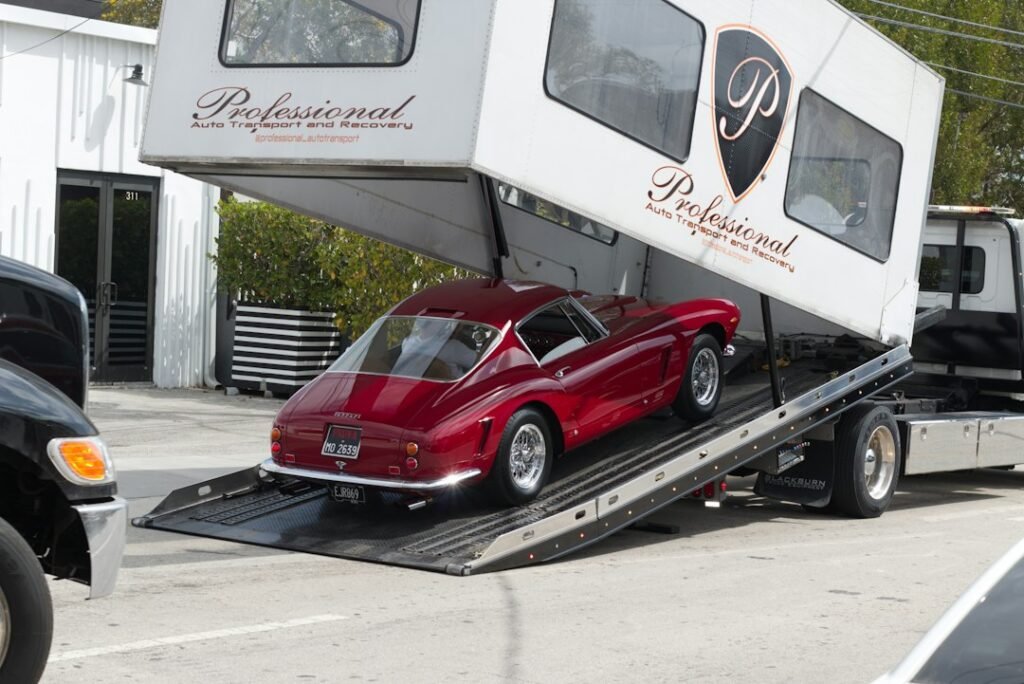
If no nearby meeting spot works, or your schedule cannot handle a meeting, ask about a smaller truck. A one- to three-car trailer can reach many streets a full-size rig cannot. It can cost more per car because the truck carries fewer vehicles, and timing may differ. For high-value cars, enclosed transport often uses smaller trailers too, and many include a liftgate for low cars.
CTS works with a network of more than 100,000 licensed and insured carriers, so we can often match the right size truck to a tricky address. Same-day pickup is also available in most major metros if you need it.
Delivery locations follow the same rules
Everything that applies at pickup also applies at delivery. If you are moving to a new home, you may not know the street well yet. Before delivery day:
- Look at your new street on a map's street view for low trees, tight corners and hills.
- Ask your new HOA or building manager about truck rules.
- Find one or two large lots close to the new address as backups.
- Make sure the person receiving the car can get to the meeting spot.
- Plan for good light so you can inspect the car before signing.
If you are moving into an apartment in a busy city, plan to meet the truck on the edge of town or near a highway exit, and drive the last few miles yourself.
What to tell your booking agent about your address
The more you share up front, the smoother pickup goes. When you book, mention:
- Whether your street is a cul-de-sac or dead end.
- Any low trees, wires or bridges on the way in.
- Steep hills or a steep driveway.
- Gates, guards or HOA truck rules.
- Any weight-limit or "no trucks" signs.
- Street parking that narrows the road.
- A large parking lot nearby you would be happy to use.
This helps the dispatcher choose a carrier with the right truck and lets the driver plan the safest approach. It also avoids last-minute surprises that can push pickup to another day.
Timing the meeting to avoid trouble
When you meet matters as much as where. Busy parking lots on a Saturday afternoon or school pickup times can make loading slow and risky. Early mornings and weekday evenings are often easier. In winter, a plowed lot is safer than an icy side street. In summer, meeting earlier in the day avoids the worst heat for you and the driver. If the driver is running late, stay at the agreed spot or let them know right away if you need to move.
Frequently asked questions
Will the driver come to my house?
If your street is safe and legal for a large truck, usually yes. If not, the driver will meet you at a nearby safe spot, often within a few miles.
Can I choose the meeting spot?
Yes. Suggest a large, flat lot near a main road. The driver will confirm if their truck can reach it.
Is it legal to load a car in a store parking lot?
Parking lots are private property. Ask permission or choose an area where it is allowed, and keep loading brief.
What if I cannot drive to the meeting place?
Tell your booking agent early. A smaller truck or a short tow can often be arranged.
Does a meeting spot change my price?
Usually not. Requesting a smaller truck to reach a tight address can add cost.
Not sure if a big rig can reach your street? Tell us about it when you get a free quote, and we will plan the easiest, safest pickup.
Updated November 4, 2026