
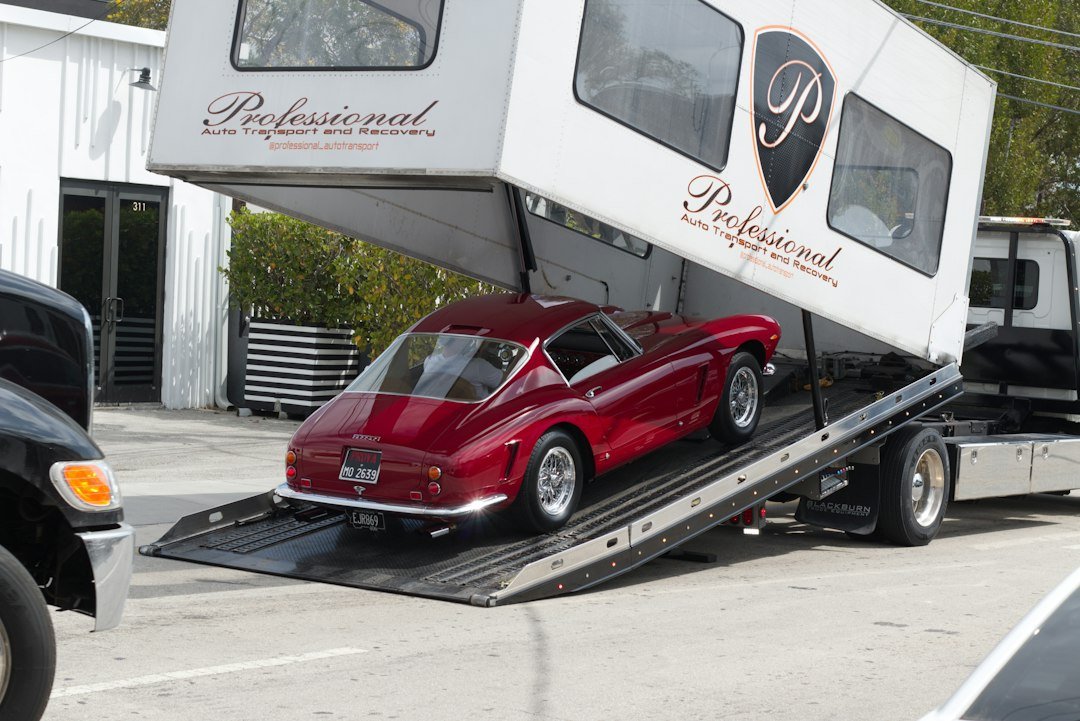
To haul an inoperable car, a carrier needs a working winch and the car usually needs to roll, steer and brake. If it cannot roll, a forklift, go-jacks or a rollback tow truck is needed instead. The pickup site also matters: the truck needs a firm, level spot with enough room for a long trailer, and a clear, straight path to the car.
Key takeaways
- A winch can pull a rolling car up the ramps, but it cannot lift a car that will not roll.
- "Rolls, steers, brakes" decides the equipment. Missing any one of the three changes the plan and the price.
- A full-size car carrier can be 70–80 feet long with the truck. It needs wide streets, overhead clearance and a firm surface.
- If the big truck cannot reach the car, a local tow to a meeting point is often the fix.
- Low cars, lifted trucks and cars without wheels each need specific gear. Tell the carrier before pickup.
The "rolls, steers, brakes" test
Before a carrier can plan a pickup, they need to know three things about the car. Here is what each one means and how to check it yourself.
Rolls
The car moves freely when pushed in neutral on flat ground. All four wheels turn. Tires hold air. Brakes are not seized, and the parking brake releases.
Steers
The steering wheel turns the front wheels. The key may need to be in the ignition to unlock the steering column. Damaged tie rods or a broken suspension arm can prevent steering.
Brakes
Pressing the brake pedal or pulling the parking brake will stop the car. Without brakes, a car can roll too far once it reaches the top of the ramp, which is a safety risk for the driver.
| Rolls | Steers | Brakes | Usual equipment |
|---|---|---|---|
| Yes | Yes | Yes | Standard winch on the carrier |
| Yes | No | Yes | Winch plus a second person or go-jacks to guide the car |
| Yes | Yes | No | Winch plus wheel chocks and extra care; some carriers decline |
| No | Any | Any | Forklift, rollback tow truck, or go-jacks to a loading point |
If you are just starting out and want the owner's step-by-step process, see our guide on how to ship an inoperable vehicle. This article covers only the equipment and site side.
Winches: how they work and their limits
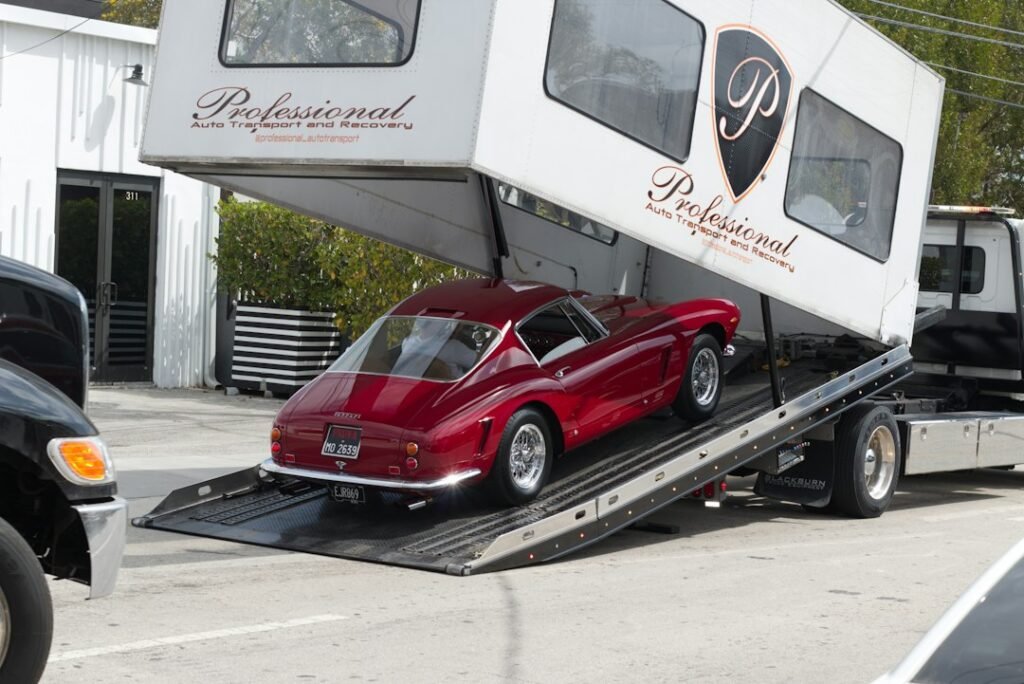
A winch is a motor-driven drum with a steel cable or synthetic rope. On car carriers, it is usually mounted at the front of the trailer or on the headrack. The driver hooks the line to a solid point on the car, and the winch pulls the car slowly up the ramps and onto the deck.
Where the line is attached
Drivers use the car's tow hooks, frame points or a strap around a solid part of the suspension. They avoid bumpers, plastic panels and steering parts. If your car has a screw-in tow eye, leave it in the car and tell the driver where it is.
What winches can and cannot do
- Can: pull a rolling car up ramps, including a heavy truck within the winch's rating.
- Can: control a car's speed as it rolls down the ramps at delivery.
- Cannot: lift a car that has no wheels or seized wheels.
- Cannot: steer the car. Someone may need to guide it.
- Cannot: safely drag a car sideways or over obstacles.
Not every carrier has one
Many car carriers are equipped for running cars only. Inop jobs have to be matched to trucks that have a winch, which is one reason they can take a little longer to schedule. CTS works with a network of 100,000+ licensed and insured carriers, which helps us find the right equipment on most routes.
When a winch is not enough: other loading equipment
Go-jacks (wheel dollies)
Go-jacks are small hydraulic dollies that slip under each tire and lift it slightly. They let a car with locked brakes or a stuck transmission be rolled in any direction on smooth, hard ground. They work poorly on gravel, grass or slopes.
Forklifts
A forklift can lift a car that does not roll at all and place it on a trailer. This is common at auction yards, salvage lots and some ports, which often have their own forklifts. At a home, a forklift usually has to be rented and delivered, which adds cost.
Rollback (flatbed) tow trucks
A rollback tilts its bed to the ground and uses its own winch to pull a car on. It can then carry the car to a spot where the big carrier can load it, or haul it the full distance on shorter trips.
Liftgates
Some enclosed trailers have a liftgate that raises the car level instead of up a ramp. This is helpful for low cars and for inop cars that must be pushed on gently. See enclosed car shipping for more.
Pickup and delivery site requirements
A big part of a successful inop pickup is the site itself. Car carriers are large, and they need space to stop, open ramps and winch a car on safely.
Space and clearance
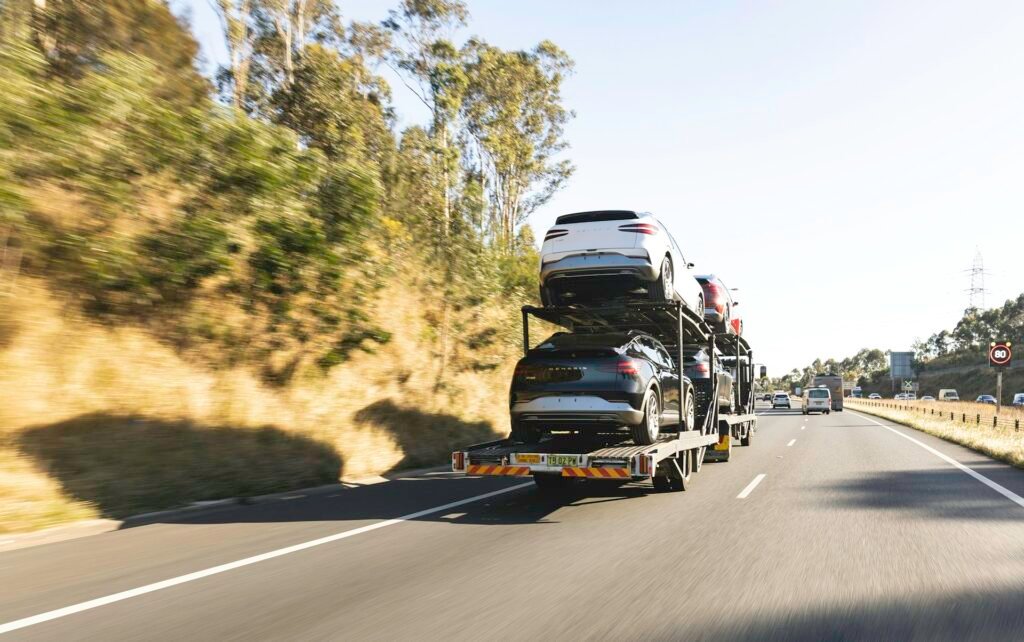
- Length: A full-size truck and trailer is often 70–80 feet long. The driver needs that much room plus space to lower ramps behind it.
- Width: The street should allow the truck to stop without blocking traffic for long, or there should be an open lot nearby.
- Height: Low tree limbs, power lines and overpasses can block a loaded top deck, which can reach about 13.5 feet.
- Turning room: Cul-de-sacs, gated communities and tight neighborhoods may not allow the truck to turn around.
Ground surface
- Firm, level pavement or packed gravel is ideal.
- Mud, soft grass, sand and steep driveways can trap a truck or make winching unsafe.
- Avoid loading on a slope if the car has weak brakes.
Path from the car to the truck
The winch pulls in a straight line. If the car is in a backyard, a garage behind other cars, or a field, it needs to be moved to a spot directly behind the trailer first. Clear junk, parts and other vehicles out of the way before pickup day.
Local rules
Some cities and homeowner associations limit where large trucks can stop. If your street does not allow it, the driver will ask to meet at a nearby store lot or wide street. This is normal with door-to-door shipping; it means "as close to your door as is safe and legal."
Site readiness checklist
Run through this list before your pickup and again before delivery.
- Car is parked where a straight line can be run from the back of the trailer.
- Tires are inflated and the car can be shifted into neutral.
- Keys are with the car, plus any screw-in tow eye.
- Path is clear of other vehicles, debris and loose parts.
- Ground is firm and as level as possible.
- No low wires or branches over the loading spot.
- A large truck can legally stop on the street, or a nearby lot has been agreed on.
- Gate codes, yard hours and release paperwork are ready for auctions, shops and storage lots.
- Someone is on site to release the car and sign the bill of lading.
- At delivery, a spot is ready where the car can be winched off and left.
Our general vehicle shipping checklist covers documents and photos for any shipment.
Special vehicles and equipment needs
Low and lowered cars
Sports cars, exotics and lowered cars can scrape on standard ramps. Race ramps, ramp extensions or a liftgate prevent this. Mention the ride height when booking. See luxury and exotic car shipping for how we handle low vehicles.
Lifted trucks and heavy vehicles
Tall trucks may not fit on an upper deck, and heavy-duty pickups may be near a winch's rating. Give the exact model, any lift or oversized tires, and whether it has a bed full of anything. Our truck shipping page has more.
Electric vehicles
A non-running EV can be harder to move because many models need power to release the parking brake or enter a tow mode. Check your owner's manual for the transport or tow mode steps and share them with the carrier. Learn more on our electric vehicle shipping page.
Cars with no wheels or on a frame
Bodies, rollers on missing wheels, and cars on a rotisserie need a forklift or a flatbed. These are quoted case by case.
Information to give the carrier before pickup
The more the driver knows, the more likely the right truck shows up the first time. Share these details when you book:
- Exact year, make, model and trim, plus any lift, lowering or oversized tires.
- Whether the car rolls, steers and brakes, and whether it shifts into neutral.
- Any missing wheels, flat tires or seized parts.
- The type of pickup site: home driveway, storage unit, body shop, auction yard or salvage lot.
- Whether the site has a forklift and staff who can load.
- Any gate codes, height limits, or hours when trucks are allowed.
A missed detail can mean a failed pickup, a dry-run fee and a new date.
Cost impact of equipment and access
Each extra piece of gear or step adds cost. As a rough guide, a simple winch job often adds about $100–$300. Forklift rentals, local tows to a meeting point, and extra labor are priced separately and vary by area. The base route price still follows our usual ranges: about $500–$1,900 for open transport and $800–$2,900 for enclosed. If you get a lower written quote for the same service, our Best Price Guarantee means we will match or beat it.
Frequently asked questions
Can a car with locked brakes be winched?
Not easily. A winch would drag the tires. The usual fix is go-jacks under the locked wheels, or a forklift. Tell us about locked brakes before pickup.
What if the truck cannot fit on my street?
The driver will suggest a nearby spot, like a store parking lot. For a non-running car, you may need a local tow to that spot. We can help you plan it.
Does the carrier bring a forklift?
No. Car carriers do not travel with forklifts. Auction yards and salvage lots often have one on site. At a home, a forklift or rollback has to be arranged separately.
Can an inoperable car go on the top deck?
Sometimes. It depends on the trailer, the winch setup, and the car's weight. Many drivers prefer to load inop cars in specific spots, so they plan the load around them.
Do I need someone at delivery to unload a non-running car?
The driver winches it off, but someone must be there to sign and to accept the car. Have a spot ready where it can sit, since it cannot be driven away.
Tell us about your car and pickup site, and we will match the right equipment. Get a free quote today.
Updated November 4, 2026