

Shipping a car to Hawaii happens in two legs: a truck (or your own drive) gets the car from your home to a West Coast port, and then a ship carries it to an island port such as Honolulu, Kahului, Hilo or Nawiliwili. Good planning means timing the inland leg so the car reaches the port before the sailing cutoff, preparing the car to meet ocean-carrier rules, and knowing what Hawaii typically requires once it arrives. This guide covers both legs, step by step.
Key takeaways
- Most Hawaii-bound cars sail from West Coast ports, usually in Southern or Northern California.
- Plan the inland truck leg first: about 1–3 days from nearby states, and about 7–10 days from the East Coast.
- Ocean carriers commonly require a fuel tank at a quarter full or less, no personal items, and a clean car.
- Financed or leased cars typically need written permission from the lienholder before they can ship.
- After arrival, new residents typically must get a Hawaii safety inspection and register the car with their county. Confirm deadlines with the county.
How car shipping to Hawaii works
There are no roads to Hawaii, so every car goes by ship for part of the trip. The trip has two main parts.
- Inland leg. Your car moves from your home to a West Coast port. You can drive it there yourself or have it trucked.
- Ocean leg. The car is checked in at the port, loaded onto a vessel, and sailed to an island port.
- Island arrival. You pick up the car at the island port, or arrange local delivery where it is available.
CTS coordinates both the inland truck leg and the ocean leg, so you deal with one point of contact. Our main Hawaii car shipping page has an overview of the service.
Mainland ports and island ports
Which ports your car uses affects timing and cost. Here are the ones most Hawaii shipments pass through.
| Island | Main arrival port | Notes |
|---|---|---|
| Oahu | Honolulu | Most frequent sailings; the hub for the state |
| Maui | Kahului | Some cars route through Honolulu first, adding a few days |
| Hawaii (Big Island) | Hilo or Kawaihae | East side (Hilo) and west side (Kawaihae) options |
| Kauai | Nawiliwili | Often routed through Honolulu |
On the mainland side, most sailings leave from the Los Angeles and Long Beach area in Southern California or the Oakland area in Northern California. Your best departure port depends on where you live and on sailing schedules. People in the Pacific Northwest, Southwest and Mountain states often truck their cars to California.
Lanai and Molokai have more limited service. If you are moving to one of those islands, ask about options early.

Planning the inland leg to the port
The inland leg is where most Hawaii timelines go wrong. The ship sails on a schedule, and if your car is not checked in by the cutoff, it waits for the next sailing.
Typical inland truck times to California ports
| Starting region | Typical truck transit |
|---|---|
| California, Nevada, Arizona | About 1–3 days |
| Pacific Northwest, Utah, Colorado | About 2–5 days |
| Texas, Midwest | About 4–7 days |
| Southeast, Northeast | About 7–10 days |
Add the pickup window to these numbers. In metro areas, same-day pickup is often available. In rural areas, pickup can take a few days.
Drive it yourself or truck it?
If you live within a few hours of the port, driving can make sense. From farther away, trucking saves wear, fuel and hotel nights, and lets you fly straight to Hawaii. Many people ship their car first and fly a week or two later so the car arrives around the same time they do. For long inland legs, see our cross-country car shipping guide.
Inland leg costs
For the truck leg alone, open transport within the mainland typically runs about $500–$1,900 depending on distance and season, and enclosed transport about $800–$2,900. The ocean leg is priced separately and depends on the island, the vehicle size and the sailing. Ask for a combined door-to-island quote so you see the full number up front. Our car shipping cost calculator can help with the inland part.
Ocean transit times
Sailing time from California to Honolulu is often about a week, and the total time from port drop-off to island pickup is commonly one to three weeks, depending on the sailing schedule and port handling. Neighbor islands can take several extra days if the car transfers in Honolulu.
A realistic plan for a mainland-to-Oahu move from the East Coast might look like this:
- Pickup at home: within a few days of your ready date.
- Truck to California: about 7–10 days.
- Port check-in and wait for sailing: a few days, depending on the schedule.
- Ocean transit and unloading: about one to two weeks.
All told, that can be roughly three to five weeks from your driveway to Honolulu. Shorter inland legs shrink that a lot. These are estimates, and schedules can change with weather, port congestion and vessel timing.
Preparing your car for the ocean leg
Ocean carriers check every car at the port. A car that does not meet their rules can be turned away, which means missing the sailing. Rules vary by carrier, so confirm the current list, but these are common requirements.
- Fuel at a quarter tank or less. This is a common safety rule for ocean shipping.
- No personal items. Most carriers do not allow household goods or loose items in the car. Factory items like a spare tire and jack are fine.
- Clean car, inside and underneath. Hawaii works hard to keep out pests and invasive plants. Remove dirt, mud, plant matter and insects.
- Working condition. Many carriers require the car to run, steer and brake. Ask in advance if your car is inoperable.
- Remove aftermarket extras that may be damaged or that change the car's size, such as roof cargo boxes and bike racks.
- Disable alarms or provide instructions.
- Bring a spare key to drop off with the car.
- Take dated photos of every side, the roof, interior and odometer.
For a general prep list, see our vehicle shipping checklist.
Documents you typically need
- Valid photo ID for the person dropping off the car.
- Current registration and title, or a copy of the title.
- Lienholder authorization. If the car is financed or leased, you typically need a letter from the lender or leasing company allowing the car to be shipped to Hawaii. Request it early; some lenders take a week or more.
- Owner authorization. If someone other than the registered owner drops off the car, a signed authorization is usually required, and some carriers want it notarized.
- Booking confirmation for the ocean leg.
Military members moving on orders may have extra options. See our military car shipping page.
After arrival: picking up and registering in Hawaii
Picking up at the island port
You will get notice when the car is ready. Bring your ID and booking paperwork. Inspect the car before you leave the port and report any damage right away. Ports often allow only a few free days before storage fees start, so plan to pick up promptly.
Safety inspection and registration
Hawaii typically requires a valid state safety inspection before a car can be registered, and registration is handled by the county, not the state. New residents typically must register an out-of-state car within about 30 days of arrival. You will usually need your shipping document, title or registration, and the safety inspection certificate. Rules and fees can change, so confirm current requirements with your county's motor vehicle office before you ship.
Insurance
Tell your insurer you are moving to Hawaii. Your policy may need to be updated or replaced with a Hawaii policy before you register.
Special vehicles: EVs, trucks, classics and motorcycles
Electric vehicles
EVs ship to Hawaii regularly, but ocean carriers often have rules on battery charge level, and some set a maximum state of charge for safety. Ask for the current rule before you drop off. Our electric vehicle shipping guide covers the inland leg.
Pickups and large SUVs
Ocean pricing is often based on vehicle size, so a full-size pickup or lifted truck usually costs more to ship than a sedan. Measure any lift kit, oversized tires or rack and share the numbers when you request a quote.
Classic and high-value cars
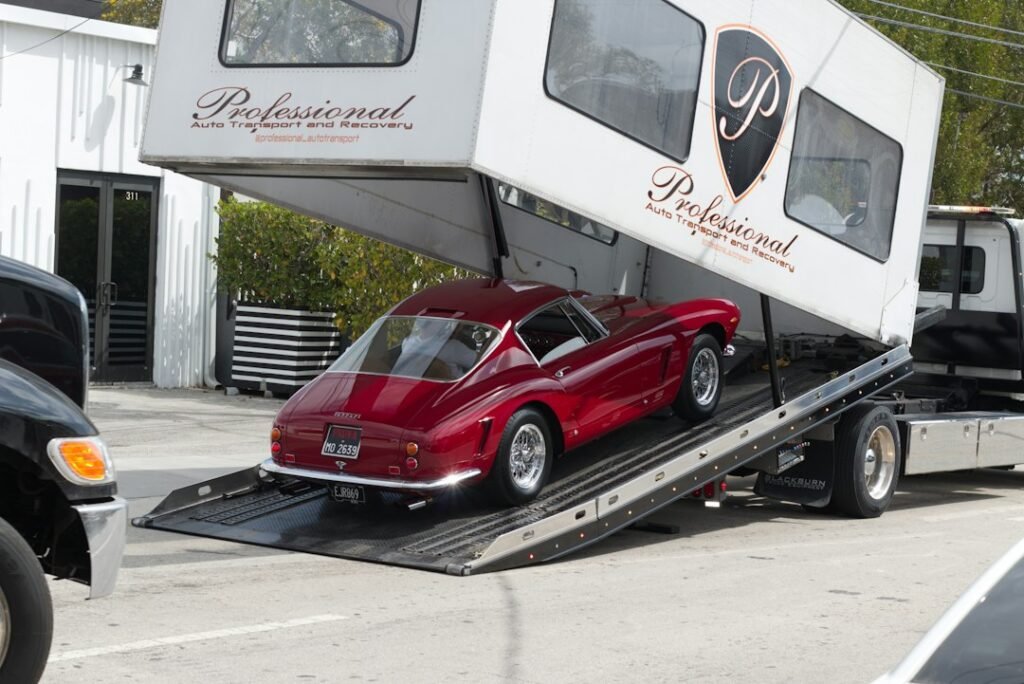
For the inland leg, an enclosed carrier keeps a classic or exotic out of weather and road debris on the way to the port. Ask your shipper how the car will be handled at the port and on the vessel, and check your own insurance for the ocean leg.
Motorcycles
Motorcycles can usually ship to Hawaii too, though the rules for crating and fuel may differ from cars. See our motorcycle shipping page for the inland part.
Shipping from Hawaii back to the mainland
The same process runs in reverse. You drop the car at an island port, it sails to a West Coast port, and a truck can take it the rest of the way to your new address. The tricky part is the handoff at the mainland port, where storage fees can start after a short free period. Our guide on port-to-door vehicle shipping coordination explains how to time it.
Hawaii car shipping checklist
- Choose your island arrival port and mainland departure port.
- Request a lienholder letter if the car is financed or leased.
- Book the ocean leg and inland truck leg together.
- Work backward from the sailing cutoff to set your pickup date.
- Clean the car, inside and underneath.
- Remove personal items and roof racks.
- Run the fuel down to a quarter tank or less.
- Photograph the car and keep the photos.
- Bring ID, title or registration, and booking paperwork.
- Pick up promptly in Hawaii, then get the safety inspection and register with your county.
Frequently asked questions
How long does it take to ship a car to Hawaii?
From California, port drop-off to island pickup is commonly one to three weeks. Add the inland truck leg, which is about 1–3 days from nearby states and about 7–10 days from the East Coast.
Can I pack belongings in my car when shipping to Hawaii?
Usually not. Most ocean carriers do not allow personal items in vehicles. Ship household goods separately.
Which mainland port should I use?
Most sailings leave from Southern California (Los Angeles and Long Beach area) or Northern California (Oakland area). The best choice depends on where you live and the sailing schedule.
Can I ship a financed car to Hawaii?
Yes, but you typically need written permission from your lender or leasing company. Request it early so it does not hold up your drop-off.
Do I have to register my car in Hawaii?
New residents typically must get a Hawaii safety inspection and register the car with their county, often within about 30 days. Confirm the current rules with your county motor vehicle office.
Can you ship my car to Maui, Kauai or the Big Island?
Yes. We ship to all major island ports. Neighbor-island shipments may route through Honolulu and take a few extra days.
Planning a move to or from the islands? Get a free quote that covers both the inland and ocean legs, with $0 deposit and our Best Price Guarantee.
Updated November 4, 2026