
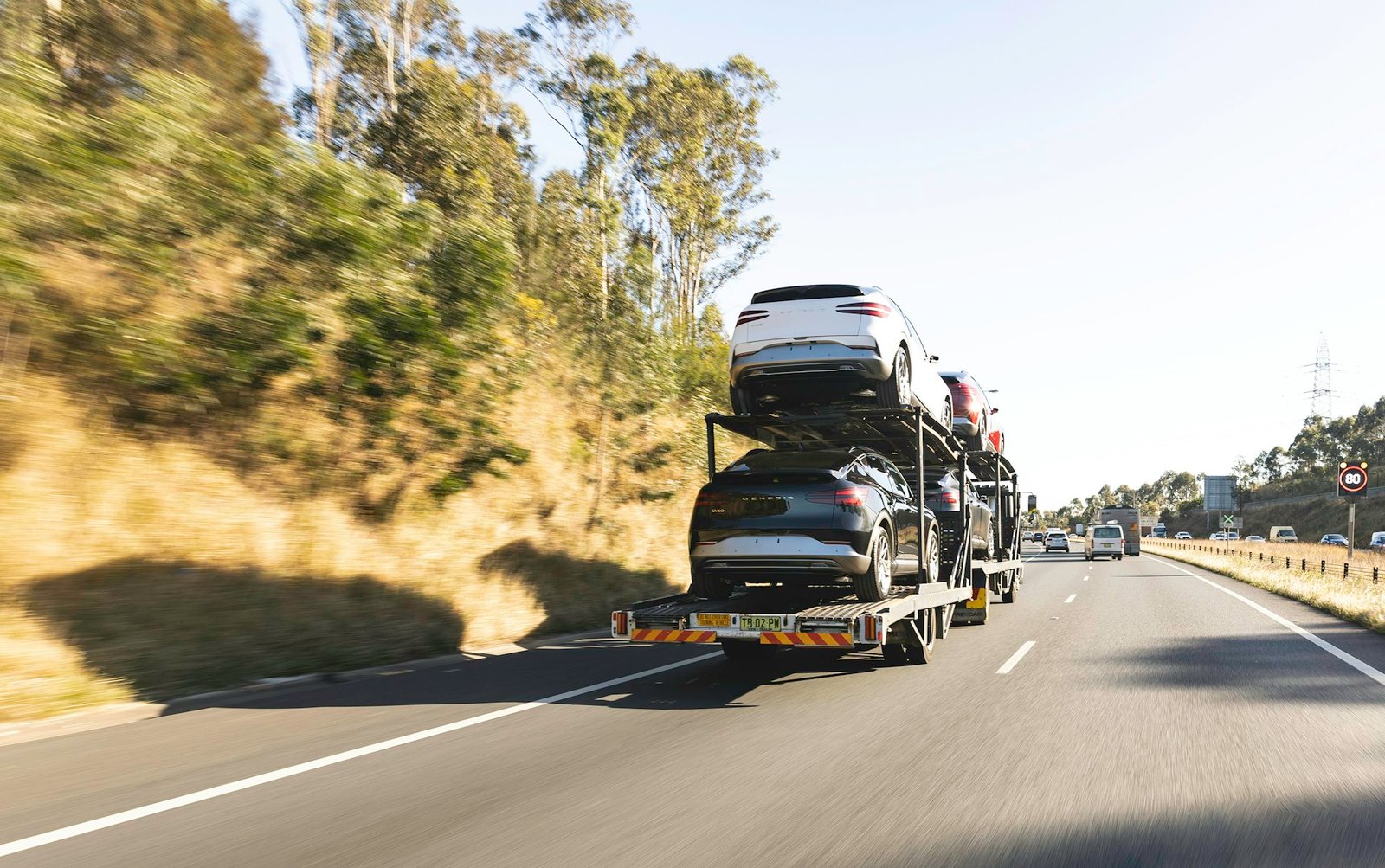
Car shipping cost per mile is not a flat rate. On an open carrier, short trips under 500 miles often work out to about $1.50 to $2.50 per mile, while coast-to-coast trips often fall closer to $0.45 to $0.70 per mile. The per-mile rate drops as distance grows because the fixed cost of loading, unloading and positioning the truck gets spread over more miles.
Key takeaways
- Per-mile rates fall as distance rises; the total price still rises.
- Most shipments have a practical floor of around $500 even for short trips.
- Use a simple framework: base distance rate, then adjust for vehicle, trailer, route, season, condition and speed.
- Enclosed transport usually adds about 30% to 60% over open for the same route.
- Per-mile math is a sanity check, not a quote. Real prices move with fuel, demand and season.
Why per-mile pricing isn't a straight line
Think about a carrier's day. Every car takes time to load and strap down, paperwork, a pickup stop and a delivery stop. That work is about the same whether your car rides 200 miles or 2,000 miles. On a short trip, that fixed effort is a big part of the price. On a long trip, it's a small part.
There's also highway efficiency. Long-haul trips spend most of their time on interstates at steady speed. Short trips often involve more city driving, more stops and more time per mile.
The result is a curve: the total price goes up with distance, but the price per mile goes down.
Typical cost per mile by distance
These are typical ranges for a standard sedan on an open carrier on common routes. They are a starting point, not a quote, and they vary with fuel prices, demand and the season.
| Trip distance | Typical open-carrier total | Rough cost per mile |
|---|---|---|
| 200–500 miles | $500–$800 | $1.50–$2.50 |
| 500–1,000 miles | $700–$1,100 | $1.00–$1.50 |
| 1,000–1,500 miles | $900–$1,400 | $0.75–$1.05 |
| 1,500–2,200 miles | $1,100–$1,700 | $0.60–$0.85 |
| 2,200+ miles (coast to coast) | $1,300–$1,900 | $0.45–$0.70 |
Notice that the per-mile ranges overlap at the edges. A 550-mile trip and a 950-mile trip are both in the same row, but the 950-mile trip will have a lower rate per mile.
Why your quote may not match the table
The table assumes a running sedan on a common route with a flexible pickup window. Change any of those and your number moves. A pickup in a small mountain town, a lifted truck, or a request for pickup tomorrow can each push a quote above the range without anything being wrong. The framework below shows how to account for those changes.
The minimum-price floor
Very short moves don't scale down forever. Even a 100-mile trip still needs a truck, a driver and a loading slot. That's why most short shipments land near $500 or more, which can look like $4 or $5 per mile on paper. That's normal, not a rip-off.
A practical pricing framework you can use
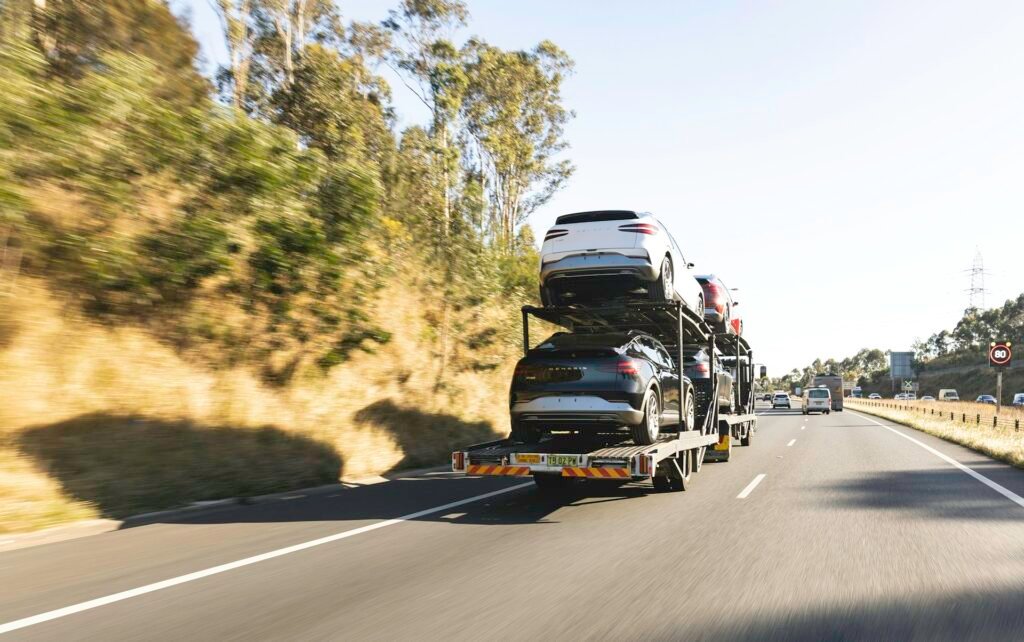
You can estimate a fair price in five steps. This is the same logic quotes are built on, just simplified.
Step 1: Start with the distance rate
Find your road miles (use a map app, not straight-line distance). Pick a per-mile rate from the table above and multiply. For a 1,200-mile trip, $0.80 to $1.00 per mile gives a starting range of about $960 to $1,200.
Step 2: Adjust for the vehicle
- Compact or midsize car: no change
- Midsize SUV or crossover: add roughly 5% to 15%
- Full-size pickup, large SUV or van: add roughly 15% to 30%
- Lifted, dually or modified trucks: ask for a custom quote
- Motorcycles: often priced differently, sometimes less than a car
Step 3: Adjust for trailer type
For enclosed transport, add about 30% to 60%. Enclosed trucks carry fewer cars, so each car pays a bigger share of the trip.
Step 4: Adjust for route and season
- Busy interstate corridor between large metros: may be at or below the range
- Rural pickup or delivery far from an interstate: add $100 to $300 or more
- Peak season or snowbird direction: add roughly 10% to 25%
- "Backhaul" direction (against the main flow of traffic): may be lower
Step 5: Adjust for condition and speed
- Non-running vehicle: add about $100 to $300 for winching
- Expedited pickup: add about $200 to $600
- Guaranteed delivery date: ask for pricing
Worked examples
Here's how the framework plays out on three common shipments. These are illustrations, not quotes.
| Example A | Example B | Example C | |
|---|---|---|---|
| Trip | 450 miles, metro to metro | 1,200 miles, mixed route | 2,800 miles, coast to coast |
| Vehicle | Midsize sedan | Full-size pickup | Sports car |
| Trailer | Open | Open | Enclosed |
| Base (miles × rate) | 450 × $1.50 = $675 | 1,200 × $0.85 = $1,020 | 2,800 × $0.55 = $1,540 |
| Vehicle adjustment | $0 | +20% = $204 | $0 |
| Trailer adjustment | $0 | $0 | +45% = $693 |
| Route / season | $0 | +$150 rural delivery | $0 |
| Rough estimate | About $675 | About $1,375 | About $2,230 |
Each example lands inside the typical ranges: $500 to $1,900 for open and $800 to $2,900 for enclosed. If a quote you get is far outside your estimate, ask why.
Trying the framework on your own trip
Grab a pen and fill in these blanks:
- Road miles from pickup to delivery: ______
- Per-mile rate from the table for that distance: ______
- Miles × rate = base: ______
- Vehicle size adjustment (0% to 30%): ______
- Enclosed adjustment, if any (30% to 60%): ______
- Route, season, condition and speed add-ons: ______
- Rough total: ______
If your rough total is below $500, use $500 as a more realistic floor. If it's far above $1,900 for open or $2,900 for enclosed, double-check your adjustments, since only very large vehicles, remote locations or rush service usually go that high.
Keep in mind that this is the same thinking behind a professional quote, but a real quote also reflects what carriers are being paid on your lane this week. That live market data is why two quotes a month apart can differ even when nothing about your car has changed.
What moves the price most (ranked)
From biggest to smallest effect in most cases:
- Distance. The main driver of the total.
- Trailer type. Enclosed can add hundreds of dollars.
- Season and direction. Supply and demand on your lane.
- Vehicle size and weight. Space and weight on the trailer.
- Location. How far your addresses are from main highways.
- Speed. Expedited pickup or guaranteed dates.
- Condition. Running vs. non-running.
Fuel prices sit behind several of these. When diesel goes up, carrier pay tends to rise across the board.
Using per-mile math to judge a quote
Per-mile math is most useful as a quick test. Divide any quote by the road miles and compare to the table.
- Way below the range? It may be a bait price that could rise later or sit unassigned. Ask the company to confirm in writing that the price will not go up after you book.
- Way above the range? Check whether it includes enclosed transport, a large vehicle, a rural address, or rush service.
- In the range? Compare the terms: deposit, price-change policy, insurance and pickup window.
For a quick estimate on your exact route, try the car shipping cost calculator. For the step-by-step booking process, see how car shipping works.
Ways to lower your per-mile cost
- Choose open transport for everyday vehicles.
- Give a pickup window of several days instead of a single date.
- Meet the driver near an interstate exit if you live in a hard-to-reach spot.
- Avoid the busiest weeks on your lane when you can.
- Book 1 to 2 weeks ahead.
- Make sure the car runs, brakes and steers.
And if you already have a lower written quote, CTS's Best Price Guarantee means we'll match or beat it for the same shipment, with a $0 deposit.
How season and direction change the rate
Car carriers go where the paying loads are. When lots of people are shipping cars in one direction, carriers can charge more in that direction and may have empty spots coming back. That's why the same route can cost different amounts going each way.
Seasonal patterns to know
- Summer (roughly June to August): The busiest moving season. Demand is high on most routes, so prices tend to be higher and pickups can take longer.
- Fall snowbird season (roughly October to December): Many people ship cars from the Northeast and Midwest to Florida, Arizona and Texas. Southbound rates on those lanes tend to rise.
- Spring return (roughly March to May): The reverse. Northbound rates on those same lanes tend to rise.
- Winter storms: Snow and ice in mountain and northern states can slow trucks and raise prices on affected routes.
- Holidays: Fewer drivers work around major holidays, so plan around them if you can.
Our snowbird car shipping guide has more on timing seasonal moves.
Why the cheapest per-mile rate isn't always the best
A per-mile number tells you nothing about what happens after you book. Two quotes with the same price can be very different deals. Before you choose on price alone, compare these:
| Factor | Why it matters |
|---|---|
| Price-change terms | A low number that can rise later isn't really low |
| Deposit | A large upfront payment adds risk if no carrier is found |
| Pickup window | A cheap price with a two-week window may cost you in rental cars |
| Insurance | Know who covers what, and any deductible |
| Licensing | Check active USDOT and MC numbers on the FMCSA site |
| Updates | Knowing where your car is helps you plan delivery |
A quote that is far below the market rate for your lane often struggles to attract a carrier. Your car can sit unassigned while your move date gets closer. A fair rate that carriers will actually accept usually gets picked up faster and with fewer surprises.
What about multi-car discounts?
Shipping two or more vehicles on the same truck, from the same pickup to the same delivery, can lower the cost per car. The carrier saves a stop and fills more of the trailer in one go. Ask for a combined quote if you're moving more than one vehicle.
Frequently asked questions
What is the average cost to ship a car per mile?
It depends on distance. Short trips are often $1.50 to $2.50 per mile, mid-range trips about $0.75 to $1.50, and cross-country trips around $0.45 to $0.70 on an open carrier. These ranges vary with season and fuel prices.
Why is a short trip more expensive per mile?
Loading, unloading, paperwork and stops cost about the same for any trip length. On short trips that fixed cost is spread over fewer miles.
Is enclosed shipping priced per mile too?
The same curve applies, but enclosed rates are usually about 30% to 60% higher than open rates for the same route.
Do car shipping companies charge by the mile?
Most don't quote a strict per-mile rate. They price each route based on distance, demand and carrier availability. Per-mile math is just a helpful way to compare quotes.
How accurate is a per-mile estimate?
It's a ballpark. Real quotes can differ because of your exact addresses, the season and current carrier demand on your lane.
Want a real number instead of an estimate? Get a free quote for your exact route and vehicle.
Updated November 4, 2026