
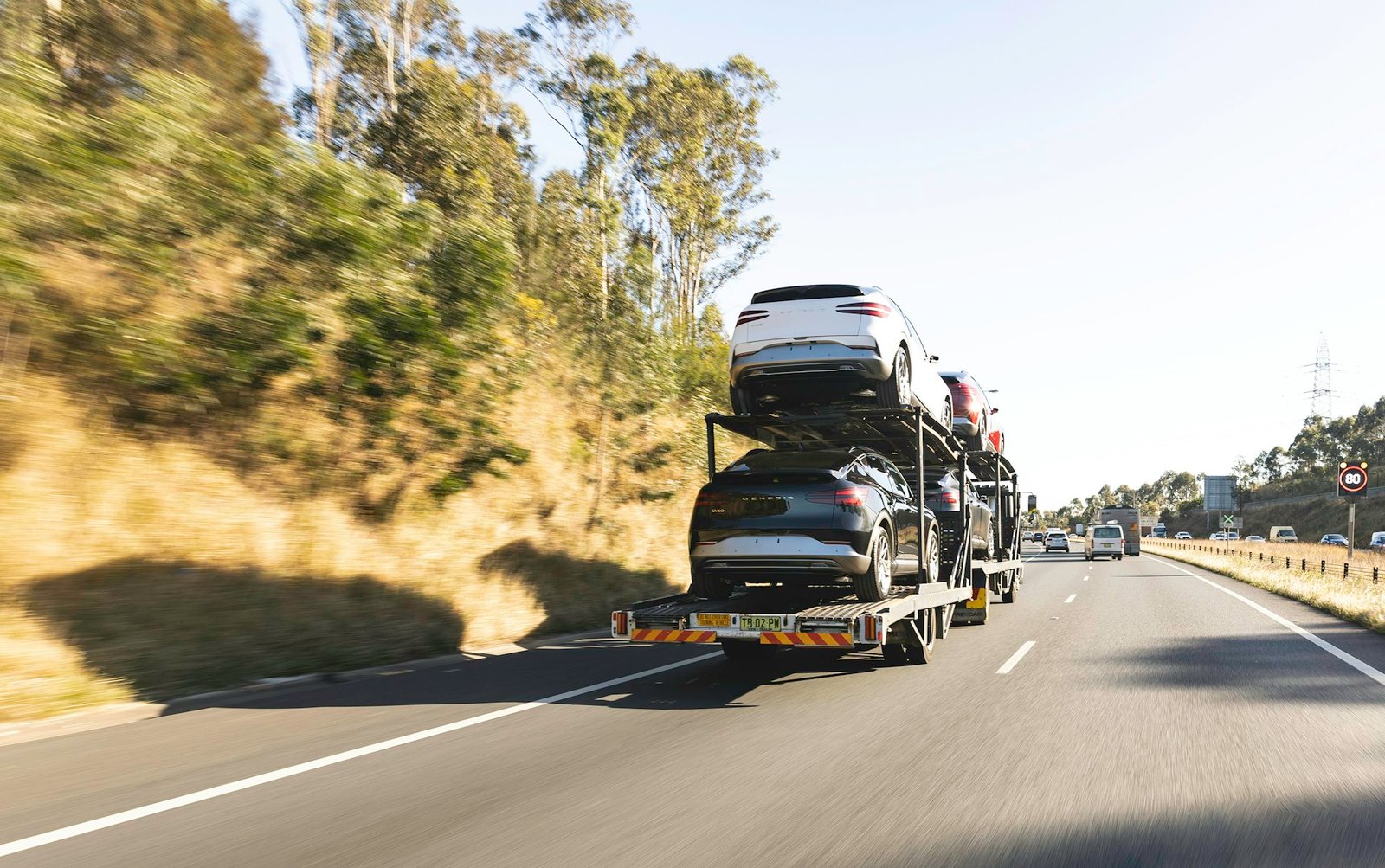
A car shipping carrier owns the trucks and physically moves your car. A broker does not own trucks; it matches your shipment with a licensed carrier from a large network, handles the booking, and stays your point of contact. Most people use a broker because it can find a truck on almost any route faster, while a carrier can work well if you happen to find one that already runs your exact route on your dates.
Key takeaways
- Carriers move cars. Brokers arrange the move and manage the carrier for you.
- Most car shipments in the U.S. are arranged through brokers, because no single carrier covers every route every day.
- Both must be registered with the FMCSA. You can look up any company's USDOT and MC numbers for free.
- Brokers must hold a $75,000 surety bond or trust fund; carriers must carry insurance and handle the physical transport.
- The best pick depends on your route, timing and how much legwork you want to do.
What a car shipping carrier does
A carrier is a trucking company, from a single owner-operator with one truck to a fleet with dozens. Carriers own or lease the trucks and trailers, employ or contract the drivers, and are responsible for the car while it is loaded.
A carrier's job includes
- Picking up the car and doing the inspection with you.
- Filling out and signing the bill of lading.
- Loading, securing and hauling the car safely.
- Following federal safety rules, including driver hours limits.
- Carrying insurance that covers damage during transport.
- Delivering the car and doing the final inspection.
The limits of going direct
A carrier usually runs a few regular lanes, such as Texas to California or the Northeast to Florida. If your route and timing match their schedule, a direct booking can work well. If not, a carrier may tell you they have no space, or that you will need to wait until their next trip through your area.
What a car shipping broker does
A broker is a licensed middleman. It does not haul cars itself. Instead, it posts your shipment to carriers, checks their credentials, sets the price, and manages the job from booking to delivery.
A broker's job includes
- Giving you a quote based on current market rates for your route.
- Finding a carrier with the right trailer and an open spot.
- Checking the carrier's authority, insurance and safety record.
- Scheduling pickup and delivery windows.
- Keeping you updated and stepping in if something changes.
- Helping you through the process if there is a damage claim.
At CTS, shipments are arranged by Niki Auto Transport (USDOT 4535689, MC 1799148), with access to 100,000+ licensed and insured carriers. That reach is the main advantage of using a broker. You can learn more on our how car shipping works page.
Broker vs. carrier: side-by-side comparison
| Factor | Broker | Carrier (direct) |
|---|---|---|
| Owns trucks | No | Yes |
| Route coverage | Nationwide, through a large network | Limited to the carrier's regular lanes |
| Pickup flexibility | High; can find another truck if plans change | Tied to one truck's schedule |
| Who you talk to | A dispatcher or agent, plus the driver near pickup | The carrier's office or the driver |
| Price | Market rate; includes the broker's service | Can be competitive if your route fits their run |
| Vetting the carrier | Done for you | You do it yourself |
| Backup if a truck breaks down | Broker can reassign | You may have to wait or start over |
| Federal registration | FMCSA broker authority + $75,000 bond or trust | USDOT number + FMCSA carrier authority + insurance |
Pros and cons of each
Using a broker
Pros
- One request reaches many carriers, so your car is more likely to get picked up on time.
- Easier to ship to or from rural areas, smaller towns, or less common routes.
- Backup options if a truck is delayed or a carrier cancels.
- Help with special needs like enclosed transport, inoperable cars, or expedited pickup.
Cons
- You do not know the exact truck until it is assigned.
- Quality varies between brokers, so you need to choose a reputable one.
- An unrealistically low quote from any broker may sit without a carrier accepting it.
Going direct to a carrier
Pros
- You talk directly to the company that moves your car.
- Can be a good fit when you find a carrier already running your route.
Cons
- Hard to find a carrier with space on your exact dates and route.
- You must check licensing, insurance and reviews yourself.
- Fewer options if the truck breaks down or the schedule slips.
How pricing works with brokers and carriers
Car shipping prices are set by the market. Carriers choose which loads to accept based on the pay, the route and how well a car fits into their trip. A broker's quote has to be high enough that a good carrier will accept the job, or the car will not move.
That is why the lowest quote is not always the best one. A very low quote may look great but can sit for days without a carrier taking it. A fair quote moves faster.
As a guide, typical prices are about $500–$1,900 for open transport and $800–$2,900 for enclosed, depending on distance, season and vehicle. Try our car shipping cost calculator for your route. With CTS, there is a $0 deposit to book, and our Best Price Guarantee means we will match or beat a lower written quote for the same service.

How to check any broker or carrier
Whether you hire a broker or a carrier, take ten minutes to check them. The Federal Motor Carrier Safety Administration (FMCSA) keeps public records you can search for free.
Vetting checklist
- Get their USDOT and MC numbers. Any legitimate company should share them openly.
- Look them up on the FMCSA website. Check that the operating status is "authorized" and the company name matches.
- Check the type of authority. A broker should have broker authority. A carrier should have carrier authority.
- Confirm insurance and bond. FMCSA records show whether insurance (for carriers) or a bond or trust (for brokers) is on file.
- Read the contract. Look for cancellation terms, deposit rules and what happens if pickup is late.
- Ask about updates. How will you know where your car is during transit?
- Get everything in writing. Price, pickup window, trailer type and any guarantees.
Registration rules can change, so confirm current requirements directly with the FMCSA.
Red flags to watch for
- No USDOT or MC number, or numbers that do not match the company name.
- Pressure to pay a large, non-refundable deposit before a carrier is assigned.
- A quote far below every other quote with no clear reason.
- Vague answers about insurance or who will actually haul the car.
- No written contract or order confirmation.
What booking through a broker looks like, day by day
Many people worry that a broker adds an extra layer of confusion. In practice, the process is simple. Here is how a typical shipment moves from your request to delivery.
Day 1: Quote and booking
You share your pickup and delivery locations, the vehicle, open or enclosed, and your first available date. You get a price and confirm the order in writing.
Days 1–5: Carrier assignment
The broker offers your car to carriers that run your route. A carrier accepts, and the broker checks its authority and insurance. You get the carrier's name and a pickup window. On busy routes this can happen the same day. In most metros, same-day pickup is available if you need it.
Pickup day
The driver contacts you before arrival. You inspect the car together, sign the bill of lading, and the car is loaded. From here, the carrier is responsible for the car.
In transit
Expect about 1–3 days for trips under 500 miles and 7–10 days coast to coast. The broker stays in touch with the carrier and passes along updates.
Delivery
The driver calls ahead, you inspect the car against the pickup report, and you sign. Any balance is paid as agreed in your contract.
What happens when plans change
Trucking runs on tight schedules, and real life gets in the way. Weather closes highways, trucks need repairs, and earlier pickups run long. How each option handles these bumps is one of the biggest practical differences.
- Truck breakdown: A carrier with one truck may have to delay until it is fixed. A broker can often move your car to another carrier.
- Your dates change: A broker can look for a different truck that fits your new window. A direct carrier may not be coming back through your area for a while.
- Damage during transport: The carrier's cargo insurance handles the claim either way. A broker can help you gather paperwork and follow up.
If you have a firm deadline, ask about a guaranteed delivery date or expedited shipping when you book.
Which should you choose?
Here is a simple way to decide:
- Choose a broker if you want the widest choice of trucks, need a specific date, are shipping to or from a rural area, or want someone to manage the details.
- Choose a carrier if you already know one that runs your exact route on your dates and you are comfortable doing your own checks.
For most people moving, buying a car online, or sending a car to college, a broker is the easier path. If you are shipping a car across the country or between states, a large carrier network helps you get on a truck sooner.
CTS adds 24/7 in-transit updates, same-day pickup in most metros, and a 100% satisfaction or money-back promise, so you get the reach of a broker with a clear point of contact.
Frequently asked questions
Is it cheaper to use a carrier directly?
Sometimes, if a carrier already runs your route and has space. Often the price is similar, because both broker and carrier quotes follow the same market rates. A broker may get your car moving faster.
Who is responsible if my car is damaged?
The carrier that hauls the car is responsible for damage during transport, and its cargo insurance pays valid claims. A good broker helps you file and follow up on the claim.
Will I know which carrier is moving my car?
Yes. Once a carrier is assigned, you should get its name and contact info, along with a pickup window. You can look up that carrier's USDOT number too.
Do brokers need a license?
Yes. Auto transport brokers that arrange interstate shipments must register with the FMCSA, hold broker authority, and file a $75,000 bond or trust fund. Confirm current rules with the FMCSA.
Why do some companies call themselves both?
Some companies hold both broker and carrier authority. They may haul some cars on their own trucks and broker others. Check their FMCSA record to see which authority they hold.
Want a carrier lined up for you? Get a free quote with $0 deposit to book.
Updated November 4, 2026